Tofacitinib and upadacitinib: rheumatoid arthritis pills instead of injections


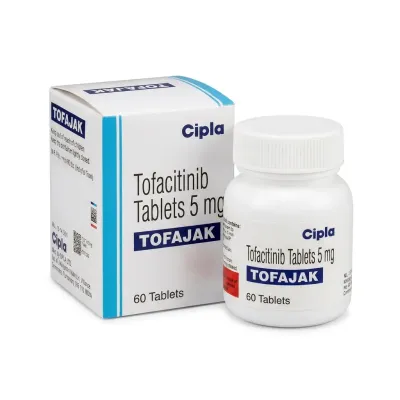
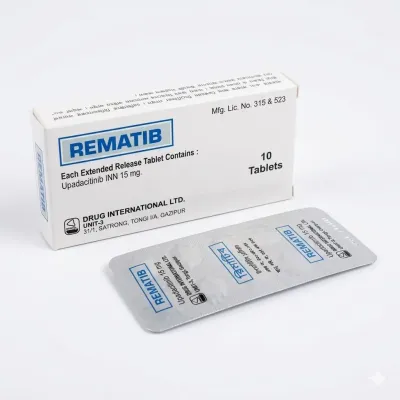
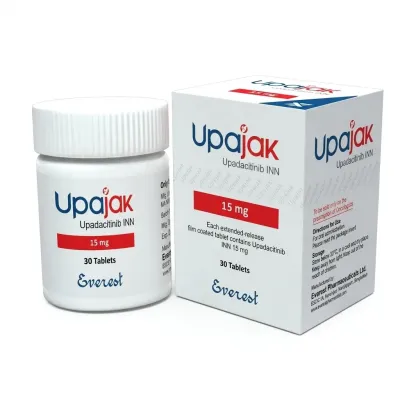
For a long time, the only alternative to methotrexate for rheumatoid arthritis that doesn't respond to standard therapy was biologic drugs — given by injection or infusion, often at a clinic under a doctor's supervision. JAK inhibitors (Janus kinase inhibitors) became the first class of rheumatoid arthritis drugs available as ordinary tablets that can be taken at home. In the Unifarm catalogue, that's Tofajak and Tofaxen (tofacitinib, original: Xeljanz, Pfizer), and Upajak, LuciUpa and Rematib (upadacitinib, original: Rinvoq, AbbVie).
This article does not replace a rheumatologist's consultation. JAK inhibitors are prescription drugs with serious contraindications that only a doctor can assess, and they are far from a first-line treatment.
How the immune system attacks its own joints
In rheumatoid arthritis, the immune system mistakenly recognizes joint tissue as foreign and attacks it, causing chronic inflammation of the synovial lining. Over time this inflammation destroys cartilage and bone, leading to joint deformity and loss of mobility. The inflammatory signal is relayed between immune cells through a chain of proteins, and Janus kinases (JAK) are a key link in that chain inside the cell itself.
JAK inhibitors block these enzymes from inside the cell, preventing the inflammatory signal from reaching the nucleus and triggering production of new pro-inflammatory proteins. This sets them apart from biologics (such as TNF inhibitors), which intercept an already-formed inflammatory signal outside the cell, before it even tries to enter.
Tofacitinib vs upadacitinib: the difference

First generation
blocks JAK1 and JAK3, twice a day

Second generation
more selective for JAK1, once a day

| Parameter | Tofacitinib (Xeljanz) | Upadacitinib (Rinvoq) |
|---|---|---|
| Dosing | Twice a day | Once a day |
| Indications | Rheumatoid arthritis, psoriatic arthritis, ulcerative colitis | Rheumatoid arthritis, atopic dermatitis and others |
| In the Unifarm catalogue | Tofajak, Tofaxen | Upajak, LuciUpa, Rematib |
When JAK inhibitors are prescribed, and when they aren't
JAK inhibitors usually don't start treatment "from zero." The standard first step for rheumatoid arthritis is methotrexate and other disease-modifying antirheumatic drugs (DMARDs). If their effect is insufficient after a few months, a doctor considers the next line — biologics or JAK inhibitors, often combined with the same methotrexate at a lower dose. The choice between a biologic and a JAK inhibitor at this stage is a doctor's decision, weighing age, coexisting conditions, lifestyle (some prefer to avoid injections), and results of prior therapy.
Important safety warnings
In 2021, a long-term tofacitinib safety trial (ORAL Surveillance) found an increased risk of serious cardiovascular events, blood clots, cancer, and death from any cause in patients over 50 with cardiovascular risk factors, compared to TNF inhibitors. Regulators (FDA, EMA) extended this warning to the entire JAK inhibitor class, including upadacitinib, though the data specifically on upadacitinib is less extensive.
- JAK inhibitors are usually prescribed when standard therapy hasn't worked. They are not first-line drugs, and only a rheumatologist decides on switching to them.
- Assessing cardiovascular risk and cancer history is mandatory before starting, especially for patients over 50 and smokers — this is exactly the group covered by the regulators' strictest warning.
- Increased infection risk, including shingles and serious infections — the drugs suppress part of the immune response that normally protects against viruses and bacteria.
- Regular blood testing (complete blood count, lipid profile, liver panel) is a mandatory part of monitoring throughout treatment, not a one-time check before starting.
This article is for reference only and does not replace a rheumatologist's consultation, who weighs the benefit-risk balance for each specific patient.