How tumour testing shapes treatment: a plain guide to cancer genetic testing


Not long ago cancer was diagnosed and treated strictly by anatomy: lung cancer with one regimen, bowel cancer with another. Today doctors increasingly look not only at the organ where the tumour grew but into its "passport" — the genetic faults that make its cells divide out of control.
For many modern drugs this test is not a formality but the key condition. Without a confirmed mutation the drug simply will not work.
Why the genetic test comes before the drug
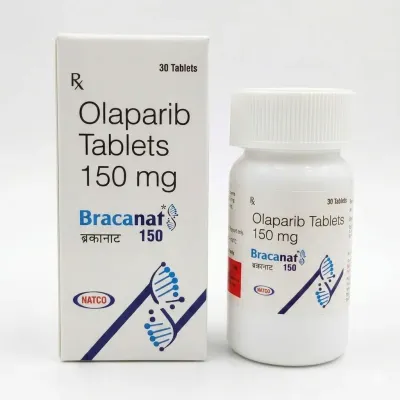
Targeted therapy works like a key and a lock. If a drug has a precise target (for example, a mutated EGFR receptor or a fault in the BRCA1/2 genes), taking it without that target is pointless. Osimertinib, for instance, is prescribed only for EGFR mutations, and olaparib for BRCA1/2 faults.
Prescribing targeted drugs "blind" means losing precious time and money while the disease keeps progressing. So the modern approach is reversed: first find the specific target, then choose the drug.
Where the sample comes from
Two sources are used, and each has its own nuances.
Tumour tissue (the main option). A section of tissue taken at biopsy or during surgery. It is usually stored in the laboratory as a paraffin block. If a block already exists, no repeat biopsy is needed — it is enough to collect it for testing.

Blood (liquid biopsy). Dying tumour cells shed fragments of DNA into the bloodstream. The test is an ordinary blood draw from a vein, with no surgery.
Important: the sample must meet strict requirements. A tissue sample needs at least 20% tumour cells, and it must be fixed correctly. When there is little tissue (for example, a lung core biopsy), laboratories ask for each tissue core to go into its own cassette so the material is not wasted.
The four main testing methods and how they differ
"Mutation testing" covers several technologies. The choice depends on what exactly the doctor is looking for.
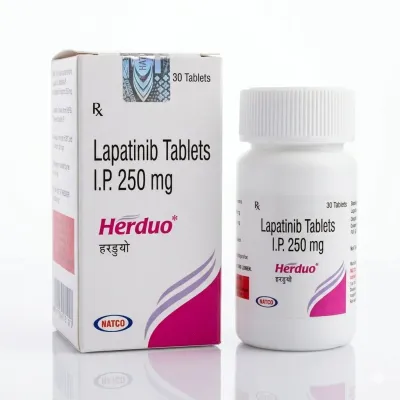
- IHC (immunohistochemistry) — checks whether a specific protein is present in the cells and how much of it (for example, PD-L1 before immunotherapy, or HER2, which decides whether lapatinib and tucatinib are an option).
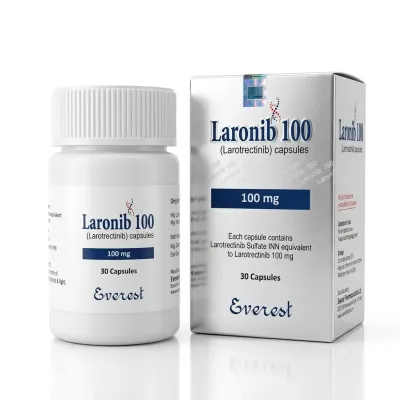
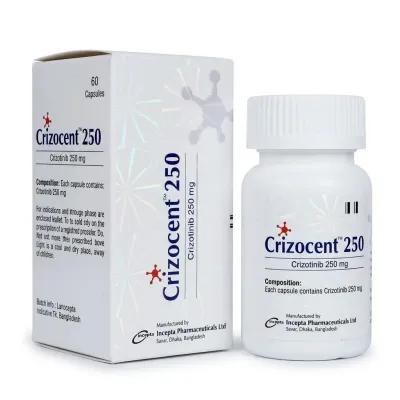
- FISH — detects gene rearrangements and amplifications. It is often used to clarify complex or borderline IHC results — for example, to confirm an ALK rearrangement, the target of crizotinib, alectinib and lorlatinib.
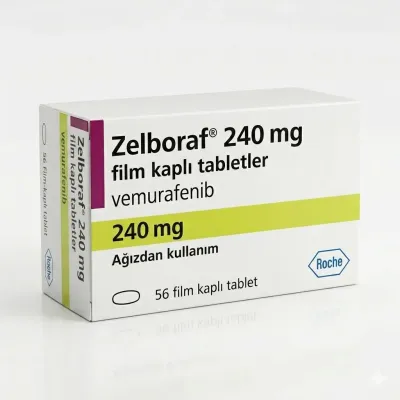
- PCR — quickly and affordably checks one or two specific, most common mutations (for example, EGFR, KRAS, BRAF). The result decides whether gefitinib and erlotinib fit an EGFR mutation, sotorasib a KRAS G12C mutation or vemurafenib BRAF V600E.
- NGS (next-generation sequencing) — scans dozens or hundreds of genes in one run. Ideal when there are many possible targets or standard tests found nothing.
PCR takes a few days; a comprehensive NGS panel can take one to three weeks.
What tissue-agnostic drugs are
One of the key discoveries of modern oncology is drugs aimed not at a particular organ but at a type of genetic fault, wherever it occurs — in the breast, lung or bowel.
Such indications are called tissue-agnostic. For example, larotrectinib and repotrectinib are prescribed for NTRK gene fusions, and selpercatinib for RET fusions, regardless of where the tumour grew.
Studies show that at least one such universal marker is found in about 21% of patients. For people with rare tumours this is often the only chance of effective treatment.
Liquid biopsy: convenient, with an important caveat
A blood test is convenient because it needs no anaesthesia and can be repeated to track changes. But it has one important feature:
- If a mutation is found in the blood, the result is considered reliable and treatment can be based on it.
- If no mutation is found, that does not mean there is none.
Some tumours (especially in the brain or abdomen) release too little DNA into the blood. If the share of tumour DNA in the plasma is below 1%, a negative result is considered uninformative. In that case the doctor will send the tissue block for testing.
Tumour testing versus test-tube assays: fact and marketing
It is important to tell apart two fundamentally different approaches.
- Molecular profiling (genetic testing) — a proven international standard that shows whether there are targets for targeted drugs.
- Chemosensitivity assays ("growing cells in a test tube") — an attempt to expose the patient's cells to different chemotherapy drugs in the lab. ASCO (the American Society of Clinical Oncology) does not recommend using these tests to choose treatment outside research, because their benefit has not been proven.
A promising development of this idea is organoids (3D mini-copies of the tumour), but the technology is still in clinical trials and is not routine practice.
What to discuss with your oncologist
To build a clear plan, ask your doctor:
- Are there genetic targets in my diagnosis for which drugs already exist?
- Is the existing paraffin block enough, or will a new tissue sample be needed?
- Which test is better in my case — a targeted one (PCR/IHC) or a broad panel (NGS)?
- How long will testing take, and how will that affect the start of treatment?
- If the blood test is negative, will we re-check the result on tissue?
- Are there free testing programmes from drug manufacturers for my diagnosis?