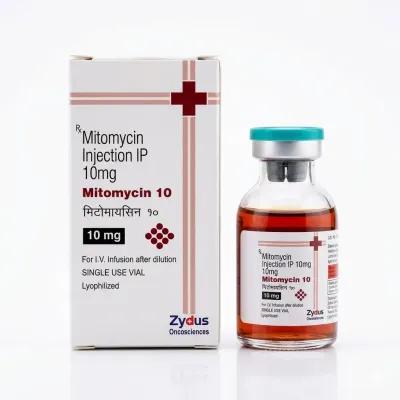
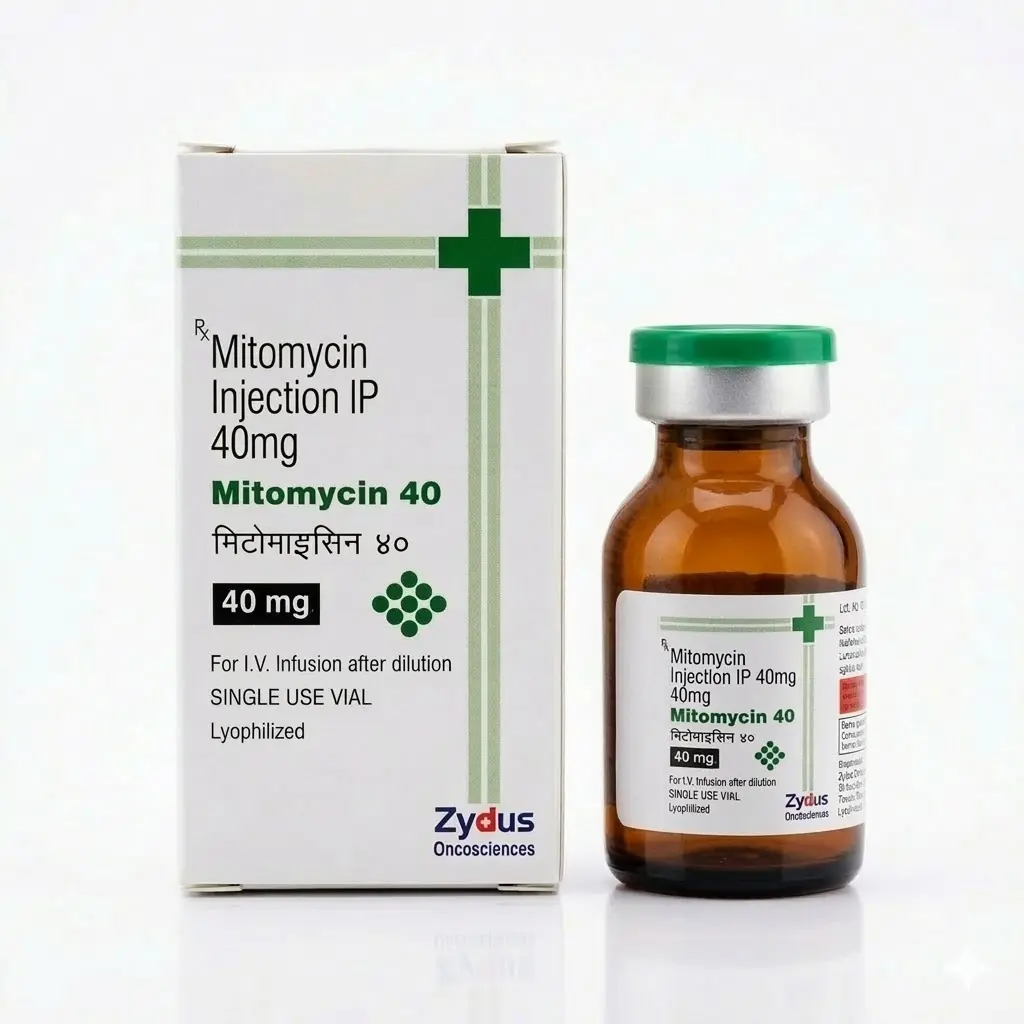
Mitomycin 40 — Mitomycin 40 mg, 1 pcs, Zydus Celexa

Mitomycin 40 — Mitomycin Injection IP 40 mg, 1 Single Use Vial

3308₴ 3844₴ -14%

Dosage

10 mg 40 mg
1
Active ingredient
Dosage form Lyophilisate for infusion
Vials per pack 1
Packaging Vial in box

Mitomycin 40 is a first-line cytotoxic antineoplastic antibiotic widely utilized in modern oncology practice for combined and single-agent chemotherapy. The active pharmaceutical ingredient of the medication is Mitomycin C at a standard dosage of 40 mg per vial. Mitomycin 40 is developed and manufactured by Zydus Oncosciences, the specialized oncology division of the leading Indian pharmaceutical conglomerate Zydus Lifesciences Ltd. Products from Zydus strictly adhere to international Good Manufacturing Practice (GMP) standards, undergoing rigorous quality assurance for chemical purity and sterility.

Pharmacologically, Mitomycin 40 belongs to the class of antitumor antibiotics exhibiting a bifunctional alkylating mechanism of action. The medication is extensively used in the complex management of gastrointestinal malignancies, breast cancer, lung carcinoma, and holds a pivotal position in intravesical instillation protocols for superficial bladder cancer. By forming cross-links within the DNA structure of malignant cells, Mitomycin 40 effectively halts DNA replication, arrests cell division, and triggers programmed cell death (apoptosis).

Key Advantages and Features of Mitomycin 40:

  • ✅ Bifunctional DNA Alkylation: Induces robust interstrand DNA cross-links, rendering tumor cell DNA repair impossible even in the presence of elevated DNA repair enzyme levels.
  • ✅ Versatile Routes of Administration: Highly effective both for systemic intravenous infusion and localized intravesical instillation (in superficial bladder tumors).
  • ✅ Convenient 40 mg Strength: Optimal single-vial dosage simplifies body surface area (BSA) dose calculations without requiring multiple low-dose vials.
  • ✅ Zydus Oncosciences Quality: Lyophilized presentation ensures long-term chemical stability and rapid reconstitution during intravenous solution preparation.

Mitomycin 40 is supplied as a sterile lyophilized powder for solution for injection/infusion:

  • Presentation and Packaging: 1 glass vial made of amber-colored glass, sealed with a rubber stopper and aluminum flip-off seal with a green plastic cap. The vial contains a sterile, blue-violet to dark-violet lyophilized cake or powder. Each outer cardboard box contains 1 vial along with a detailed package insert.
  • Active Ingredient:
    • Mitomycin C — 40 mg per single-use vial.
  • Excipients: Mannitol (or sodium chloride as a lyoprotectant) to maintain iso-osmolarity and cake structure.

Pharmacodynamics: Mitomycin C is an antineoplastic antibiotic isolated from Streptomyces caespitosus. In tissues, it undergoes enzymatic reduction to generate an active alkylating species. It acts as a bi- and tri-functional alkylating agent. The activated drug selectively binds to guanine and cytosine residues, forming interstrand and intrastrand DNA cross-links. This inhibits DNA synthesis and, to a lesser extent, RNA and protein synthesis. Mitomycin C is most active in late G1 and early S phases of the cell cycle.

Pharmacokinetics: Following intravenous administration, Mitomycin C is rapidly distributed into body tissues but poorly crosses the blood-brain barrier (BBB). It is extensively metabolized, primarily in the liver, as well as in other tissues. Clearance occurs via enzymatic inactivation. The elimination half-life (T1/2) ranges from 25 to 50 minutes. Approximately 10–20% of the administered dose is excreted unchanged in the urine within 4 to 5 hours. Systemic absorption following intravesical instillation is minimal.

Mitomycin 40 is indicated for palliative or adjuvant single-agent or combination chemotherapy in the following malignancies:

  • 🔹 Gastric and Pancreatic Adenocarcinoma: In combination with other antineoplastic agents (e.g., fluorouracil, doxorubicin) for advanced disease.
  • 🔹 Breast Cancer: Locally advanced or metastatic breast carcinoma refractory to first-line regimens.
  • 🔹 Non-Small Cell Lung Cancer (NSCLC): As part of multi-agent chemotherapy regimens.
  • 🔹 Esophageal, Anal, and Cervical Cancers: Combined with radiotherapy and concurrent chemotherapy.
  • 🔹 Superficial Bladder Cancer: Intravesical instillation for treatment and prophylaxis of recurrence following transurethral resection (TURBT).

Mitomycin 40 must be administered under the strict supervision of a qualified oncologist in a specialized setting:

  • 👨‍⚕️ Intravenous Administration: The standard dose in monotherapy is 15–20 mg/m² body surface area IV slow bolus or short infusion every 6–8 weeks. In combination regimens, the dosage is reduced to 10–12 mg/m² every 6 weeks.
  • 👨‍⚕️ Intravesical Instillation: For superficial bladder carcinoma, 20–40 mg dissolved in 20–40 mL of sterile water or 0.9% sodium chloride is instilled into the bladder via catheter and retained for 1–2 hours once weekly for 6–8 weeks.
  • 👨‍⚕️ Reconstitution: Dissolve the lyophilized powder in sterile water for injection or 0.9% sodium chloride at a concentration not exceeding 1 mg/mL. The reconstituted solution must be clear and purple.
  • 🥤 Hematologic Monitoring: Repeat cycles should only be administered after hematologic recovery (WBC > 4000/µL, platelets > 100,000/µL).

Mitomycin 40 is strictly contraindicated under the following conditions:

  • ❌ Hypersensitivity to Mitomycin C or any excipients in the formulation.
  • ❌ Severe bone marrow depression (severe leukopenia or thrombocytopenia).
  • ❌ Coagulation disorders, bleeding diathesis, or active hemorrhage.
  • ❌ Severe renal impairment (significantly elevated serum creatinine).
  • ❌ Pregnancy and lactation (breastfeeding).

Clinically significant interactions with Mitomycin 40 include:

  • ⚠️ Myelosuppressive Agents & Radiation: Concomitant use with other cytotoxic drugs or radiation therapy produces additive bone marrow suppression.
  • ⚠️ Vinca Alkaloids: Severe acute bronchospasm and dyspnea have been reported when Mitomycin C is administered concurrently or sequentially with vinblastine/vinorelbine.
  • ⚠️ Doxorubicin: Increased risk of cumulative cardiotoxicity.
  • ⚠️ Live Vaccines: Vaccination with live viral vaccines during Mitomycin therapy is contraindicated due to the risk of severe systemic infection.

Mitomycin C possesses proven mutagenic, teratogenic, and embryo-fetal lethal properties:

  • 🤰 Pregnancy: Mitomycin 40 is contraindicated during pregnancy. It can cause fetal harm and congenital malformations. Females of childbearing potential must use effective contraception during treatment and for at least 6 months thereafter.
  • 🛡️ Male Contraception: Male patients receiving Mitomycin 40 must use reliable barrier contraception and refrain from fathering a child during treatment and for 3–6 months post-therapy.
  • 🤱 Lactation: It is unknown whether Mitomycin C is excreted in human milk. Breastfeeding must be discontinued throughout therapy.

Possible adverse reactions associated with Mitomycin 40 treatment include:

  • 🔴 Hematologic Toxicity: Cumulative leukopenia, thrombocytopenia (nadir typically occurs 4–8 weeks post-injection), and anemia.
  • 🟡 Renal Toxicity: Elevated serum creatinine and BUN, Hemolytic Uremic Syndrome (HUS) characterized by microangiopathic hemolytic anemia, thrombocytopenia, and renal failure.
  • 🟠 Pulmonary Effects: Interstitial pneumonitis, pulmonary fibrosis, dyspnea, dry cough.
  • 🟢 Gastrointestinal: Nausea, vomiting, stomatitis, anorexia, diarrhea, transient elevation of hepatic enzymes (ALT, AST).
  • 🔵 Local Reactions: Severe soft tissue necrosis and phlebitis following extravasation. Dysuria, cystitis, and hematuria following intravesical administration.

Overdose management for Mitomycin 40:

  • Symptoms: Severe bone marrow aplasia (agranulocytosis, severe bleeding due to thrombocytopenia), intractable nausea, vomiting, fever, and severe mucositis.
  • Management: No specific antidote exists. Immediately discontinue the drug and initiate supportive care: blood component transfusions (packed RBCs, platelets), granulocyte colony-stimulating factors (G-CSF), and empiric broad-spectrum antibiotics for neutropenic fever. Hemodialysis is ineffective.

Storage and handling requirements for Mitomycin 40:

  • Temperature: Store in the original carton at temperatures not exceeding 25 °C, protected from light and moisture.
  • Reconstituted Solution: Use immediately after preparation. Reconstituted solutions protected from light may be stored at 2–8 °C for up to 24 hours.
  • Safety: Store out of reach of children. Handle according to cytotoxic drug preparation guidelines.
  • Shelf Life: 2 years (24 months) from manufacture date. Do not use past expiration date.

Visual identification guidelines for authentic Mitomycin 40 by Zydus Oncosciences:

  • Carton Design: White outer box featuring a green cross emblem at the top with vertical green stripes. Front panel clearly prints: Mitomycin Injection IP 40mg, bold Mitomycin 40, Hindi text (मिटोमाइसिन ४०), a black dosage box stating 40 mg, and a green circular pattern icon.
  • Branding: Displays the official Zydus Oncosciences corporate logo on both box and vial. Includes specific descriptors: For I.V. Infusion after dilution, SINGLE USE VIAL, and Lyophilized.
  • Vial Packaging: Amber glass vial fitted with a green flip-off plastic cap sealed with an aluminum ring. The vial label mirrors the box design typography.
  • Batch Details: Side panel of the carton and vial label feature laser-printed Batch No., Mfg. Date, Exp. Date, and Maximum Retail Price (M.R.P.).
100% original product
Delivery across Ukraine
1

Notice. The information on this page is for reference only and does not replace medical consultation. Always consult a healthcare professional and read the manufacturer's instructions before using any medicine. Self-medication may be dangerous. Information updated: 27.08.2026

Customer reviews

What Customers Say

No reviews yet

Your review can be the first!

Contact us

Choose a convenient way to contact

We work daily from 9:00 to 20:00