Soranib — Sorafenib 200 mg, 120 pcs, Cipla

Soranib (Sorafenib) 200 mg Tablets (120 Count)

4962₴ 5900₴ -16%

Analogues

1
Active ingredient
Dosage
200 mg
Dosage form Tablets
Tablets per pack 120
Packaging Plastic bottle in a box

Soranib is an advanced, highly effective antineoplastic medication belonging to the class of multi-kinase inhibitors, engineered for target-specific cancer therapy. Each film-coated tablet contains 200 mg of Sorafenib (as Sorafenib Tosylate). Soranib is a certified, high-quality generic equivalent of the innovator drug Nexavar® manufactured by Bayer. It is specifically formulated to achieve systemic inhibition of tumor cell proliferation while simultaneously suppressing tumor angiogenesis — the formation of new blood vessels essential for supplying oxygen and vital nutrients to growing malignant masses.

Manufactured by Cipla Ltd. (India) — a premier global pharmaceutical giant with over 85 years of healthcare innovation. Cipla operates state-of-the-art manufacturing facilities fully accredited by major stringent regulatory agencies worldwide, including the US FDA, EMA (European Union), MHRA (UK), and WHO-GMP. The company’s products guarantee rigorous bioequivalence, high active ingredient purity, and reproducible pharmacokinetic profiles identical to reference listed drugs.

Key Clinical Advantages and Therapeutic Highlights of Soranib:

  • ✅ Dual Pathway Tumor Inhibition: Unlike single-target therapies, Sorafenib simultaneously targets intracellular serine/threonine kinases in tumor cells and receptor tyrosine kinases in the tumor vasculature. This dual mechanism induces direct cellular apoptosis and halts tumor progression by depriving the tumor of vascular supply.
  • ✅ Extensive Clinical Validation: Soranib represents a gold-standard first- and second-line targeted therapy for patients with unresectable hepatocellular carcinoma, advanced renal cell carcinoma, and radioiodine-refractory differentiated thyroid carcinoma, significantly expanding progression-free survival (PFS) and overall survival (OS).
  • ✅ Proven Bioequivalence: Cipla’s stringent quality control measures ensure complete active drug release and consistent plasma drug concentration matching the reference drug, providing patients with world-class oncology care at a substantially reduced financial burden.
  • ✅ Convenient 120-Tablet Bottled Packaging: The 120-tablet bottle format provides a complete 30-day treatment supply under the standard daily dosing regimen of 800 mg (4 tablets daily), eliminating the hassle of procuring partial blister packs mid-cycle.

Soranib 200 mg is supplied as round, film-coated tablets formulated for oral administration with enteric protection against gastric acid degradation:

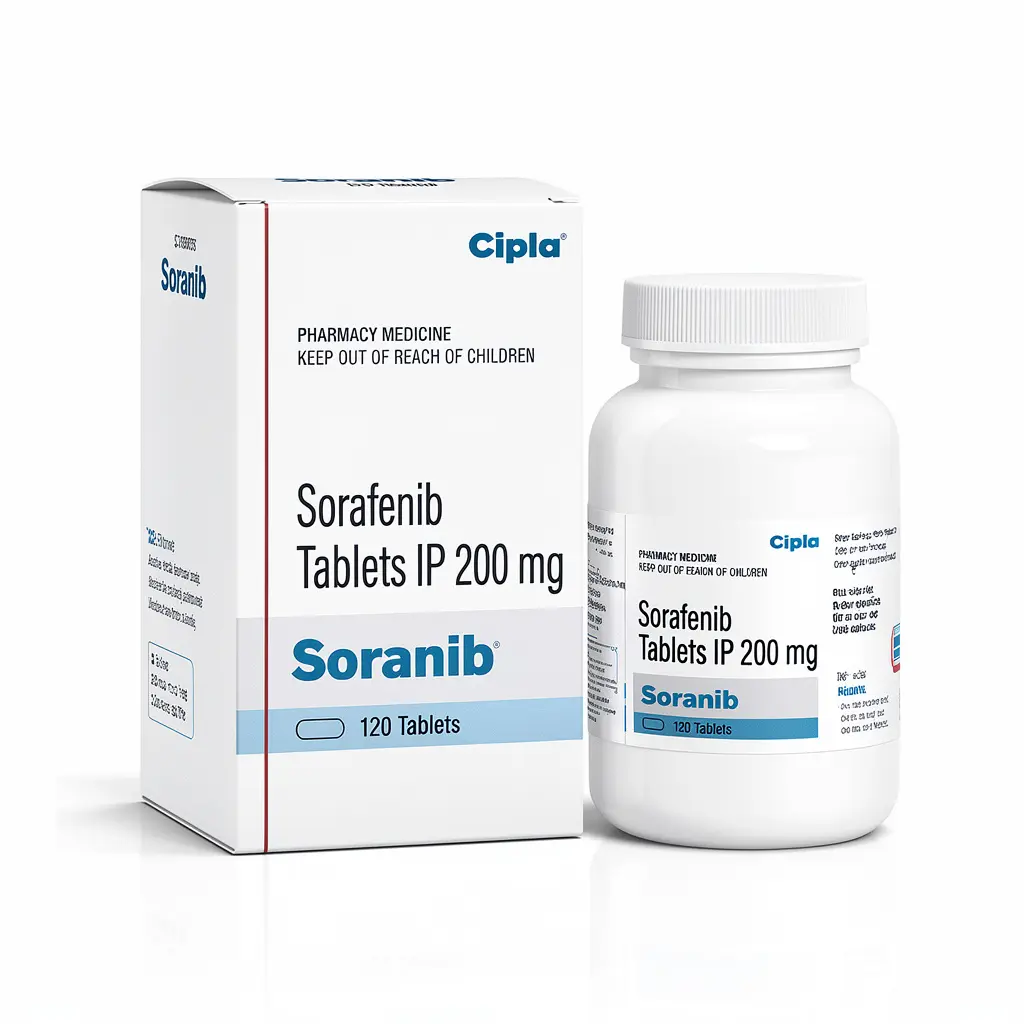
  • Packaging and Presentation: High-density polyethylene (HDPE) bottle containing 120 film-coated tablets. The bottle features a child-resistant safety closure cap and an internal induction foil seal. Each bottle is packed in an individual cardboard outer carton complete with comprehensive prescribing information.
  • Active Pharmaceutical Ingredient (API): Sorafenib I.P. — 200 mg per tablet (equivalent to 274 mg of Sorafenib Tosylate).
  • Tablet Core Excipients: Croscarmellose sodium (disintegrant), microcrystalline cellulose (binder/filler), hypromellose (hydroxypropyl methylcellulose), sodium lauryl sulfate (surfactant for dissolution enhancement), magnesium stearate (lubricant).
  • Film-Coating Composition: Opadry Red film-coating system (hypromellose, titanium dioxide as pigment, macrogol/polyethylene glycol as plasticizer, red iron oxide as colorant).

Pharmacodynamics: Sorafenib is a multikinase inhibitor that decreases tumor cell proliferation in vitro. It inhibits multiple intracellular kinases (C-RAF, BRAF, and mutant BRAF V600E) and cell surface receptor tyrosine kinases (KIT, FLT-3, RET, RET/PTC, VEGFR-1, VEGFR-2, VEGFR-3, and PDGFR-beta). Several of these kinases are implicated in tumor cell signaling, apoptosis, and tumor angiogenesis. By selectively binding to these enzymatic targets, Sorafenib disrupts the downstream RAF/MEK/ERK signaling pathway, driving malignant cell apoptosis and suppressing tumor vessel formation.

Pharmacokinetics: Following oral administration of Soranib tablets, the mean absolute bioavailability of sorafenib ranges from 38% to 49%. Peak plasma concentration (Cmax) is attained approximately 3 hours post-dose. Plasma protein binding of sorafenib (primarily to serum albumin) is extremely high at approximately 99.5%. Sorafenib undergoes oxidative metabolism in the liver mediated primarily by CYP3A4, as well as glucuronidation mediated by UGT1A9. The main circulating metabolite in plasma is the pyridine N-oxide, which demonstrates in vitro potency similar to that of sorafenib. Excretion occurs mainly through the feces (approx. 77%, with 51% as unchanged drug) and urine (approx. 19% as glucuronidated metabolites). The elimination half-life (T1/2) ranges from 25 to 48 hours, enabling sustained therapeutic drug levels with twice-daily administration.

Soranib (Sorafenib 200 mg) is indicated for the treatment of the following neoplastic conditions:

  • 🔹 Hepatocellular Carcinoma (HCC): Treatment of patients with unresectable, locally advanced, or metastatic hepatocellular carcinoma (specifically patients with Child-Pugh Class A liver function).
  • 🔹 Advanced Renal Cell Carcinoma (RCC): Treatment of patients with advanced renal cell carcinoma who have failed prior cytokine-based therapy (Interferon-alpha or Interleukin-2) or for whom such therapy is deemed unsuitable.
  • 🔹 Differentiated Thyroid Carcinoma (DTC): Treatment of locally recurrent or metastatic, progressive, differentiated thyroid carcinoma (papillary, follicular, or Hürthle cell) refractory to radioactive iodine (131I) therapy.

Dosing and administration of Soranib must be conducted under the direct supervision of a qualified medical oncologist:

  • 💊 Standard Daily Dosing: The recommended daily dose of Sorafenib is 400 mg (2 tablets of 200 mg) taken twice daily. The total recommended daily dose is 800 mg.
  • 🥤 Administration Guidelines: Tablets must be swallowed whole with a full glass of water. Soranib should be taken between meals (at least 1 hour before or 2 hours after a meal) or with a low-fat/moderate-fat meal. Administration alongside a high-fat meal reduces sorafenib bioavailability by 29–30%.
  • ⏰ Dosing Schedule: Take doses approximately 12 hours apart at consistent times daily (e.g., 8:00 AM and 8:00 PM). If a dose is missed, skip the missed dose and resume the normal schedule; do not double the dose.
  • ⏱️ Treatment Duration: Treatment should be continued as long as clinical benefit is observed or until unacceptable treatment-related toxicity develops.
  • ⚠️ Dose Modifications for Toxicity: Management of suspected adverse drug reactions (e.g., hand-foot skin reaction, severe hypertension) may require temporary interruption or dose reduction to 400 mg once daily (or 400 mg every other day).

Soranib is strictly contraindicated in patients presenting with the following clinical conditions:

  • ❌ Known severe hypersensitivity to Sorafenib, Sorafenib Tosylate, or any inactive excipients in the tablet formulation.
  • ❌ Pregnancy and breastfeeding (lactation) period.
  • ❌ Pediatric patients under 18 years of age (safety and efficacy in pediatric populations have not been established).
  • ❌ Co-administration of sorafenib with carboplatin and paclitaxel in patients with squamous cell lung cancer.
  • ❌ Use with Extreme Caution: Close clinical monitoring is required in patients with severe uncontrolled hypertension, active bleeding diathesis, unstable angina, recent myocardial infarction, severe hepatic impairment (Child-Pugh Class C), or concomitant anticoagulant therapy.

Sorafenib exhibits multiple clinically significant pharmacokinetic and pharmacodynamic drug interactions:

  • ⚠️ CYP3A4 Inducers: Co-administration of strong CYP3A4 inducers (e.g., rifampin, phenytoin, carbamazepine, phenobarbital, dexamethasone, and St. John’s wort) accelerates sorafenib clearance and markedly decreases plasma concentrations, leading to compromised antitumor efficacy.
  • ⚠️ CYP3A4 & UGT1A9 Inhibitors: Potent inhibitors (e.g., ketoconazole, itraconazole, clarithromycin) may elevate sorafenib systemic exposure.
  • ⚠️ Warfarin & Coumarin Anticoagulants: Infrequent bleeding events or elevated International Normalized Ratio (INR) changes have been reported in patients taking warfarin concomitantly with sorafenib. Regular prothrombin time/INR monitoring is mandatory.
  • ⚠️ Cytotoxic Agents (Docetaxel, Paclitaxel, Irinotecan): Sorafenib inhibits UGT1A1 and UGT1A9 glucuronidation pathways, which can lead to increased plasma concentrations of irinotecan (and its active metabolite SN-38) and docetaxel, thereby exacerbating toxicity.

Strict clinical precautions regarding reproductive safety must be observed during Soranib therapy:

  • 🤰 Pregnancy: Based on animal studies and its mechanism of action, Sorafenib causes severe embryo-fetal lethality, teratogenicity, and structural malformations. Soranib is strictly contraindicated during pregnancy. Female patients of childbearing potential and male patients must utilize highly effective barrier contraception during treatment and for at least 2 months following the final dose.
  • 🤱 Lactation: It is unknown whether sorafenib or its metabolites are excreted in human milk. Because of the potential for serious adverse reactions in nursing infants, breastfeeding must be discontinued throughout the duration of Soranib therapy.

Sorafenib therapy is associated with adverse drug reactions involving multiple organ systems:

  • 🔴 Dermatologic Reactions (Very Common): Hand-foot skin reaction (palmar-plantar erythrodysesthesia syndrome characterized by painful erythema, swelling, hyperkeratosis, and blistering on hands and feet), maculopapular rash, alopecia, pruritus, dry skin, erythema.
  • 🟡 Gastrointestinal Disorders: Diarrhea (frequently reported), nausea, vomiting, stomatitis, mucosal inflammation, dry mouth, dyspepsia, anorexia (decreased appetite), constipation, pancreatitis.
  • 🟠 Cardiovascular Events: Hypertension (elevated blood pressure requiring antihypertensive therapy), hemorrhage (including epistaxis, gingival bleeding, and gastrointestinal bleeding episodes).
  • 🟢 Systemic & Laboratory Abnormalities: Fatigue, severe asthenia, musculoskeletal pain (arthralgia, myalgia), weight loss, elevated serum transaminases (ALT, AST) and lipase levels, hypophosphatemia, lymphopenia, neutropenia.

Clinical management guidelines in cases of accidental or intentional overdose:

  • Symptoms of Overdose: The highest clinical dose evaluated is 800 mg twice daily (double the standard daily dose). Overdose primarily exacerbates the frequency and severity of adverse effects, particularly intractable diarrhea, severe dermatologic toxicity, and acute hypertension.
  • Management: There is no specific antidote for sorafenib overdose. In the event of suspected overdose, Soranib administration should be immediately discontinued, gastric lavage considered if recent, and appropriate supportive care initiated. Hemodialysis and peritoneal dialysis are ineffective due to sorafenib's high plasma protein binding (>99.5%).

Mandatory handling and storage parameters for Soranib:

  • 🌡️ Storage Temperature: Store in the original package at controlled room temperature below 25 °C (excursions permitted up to 30 °C in accordance with climate zone II/IV stability guidelines).
  • ☀️ Environmental Protection: Protect from direct sunlight, excessive ultraviolet exposure, and moisture. Keep the HDPE bottle tightly closed when not in use.
  • 👶 Child Safety: Keep out of reach and sight of children (Store under: Pharmacy Medicine — Keep out of reach of children).
  • ⏳ Shelf Life: 24 months from the manufacturing date. Do not use after the expiration date clearly stamped on the package.

Original Soranib 200 mg manufactured by Cipla Ltd. is equipped with advanced multi-stage authenticity and anti-tamper security features:

  • 🛡️ Official Packaging Design: The outer carton is printed on high-grade clinical-grade board featuring Cipla’s registered blue corporate logo, crisp typography, and red accent vertical band.
  • 🔍 Tamper-Evident Safety Features: The white HDPE bottle is fitted with a break-ring security closure cap. Beneath the cap, an induction-sealed heavy aluminum foil membrane securely seals the neck of the bottle.
  • 📦 Factory Batch Markings: The side panel of the outer carton and the bottle label feature laser-etched/embossed manufacturing details: Batch Number (Batch No.), Manufacturing Date (Mfg. Date), Expiry Date (Exp. Date), and Maximum Retail Price in India (M.R.P. incl. of all taxes).
100% original product
Delivery across Ukraine
1

Notice. The information on this page is for reference only and does not replace medical consultation. Always consult a healthcare professional and read the manufacturer's instructions before using any medicine. Self-medication may be dangerous. Information updated: 27.08.2026
Customer reviews

What Customers Say

No reviews yet

Your review can be the first!

Contact us

Choose a convenient way to contact

We work daily from 9:00 to 20:00