Erdanat 3 — Erdafitinib 3 mg, 28 pcs, Natco
100% original product

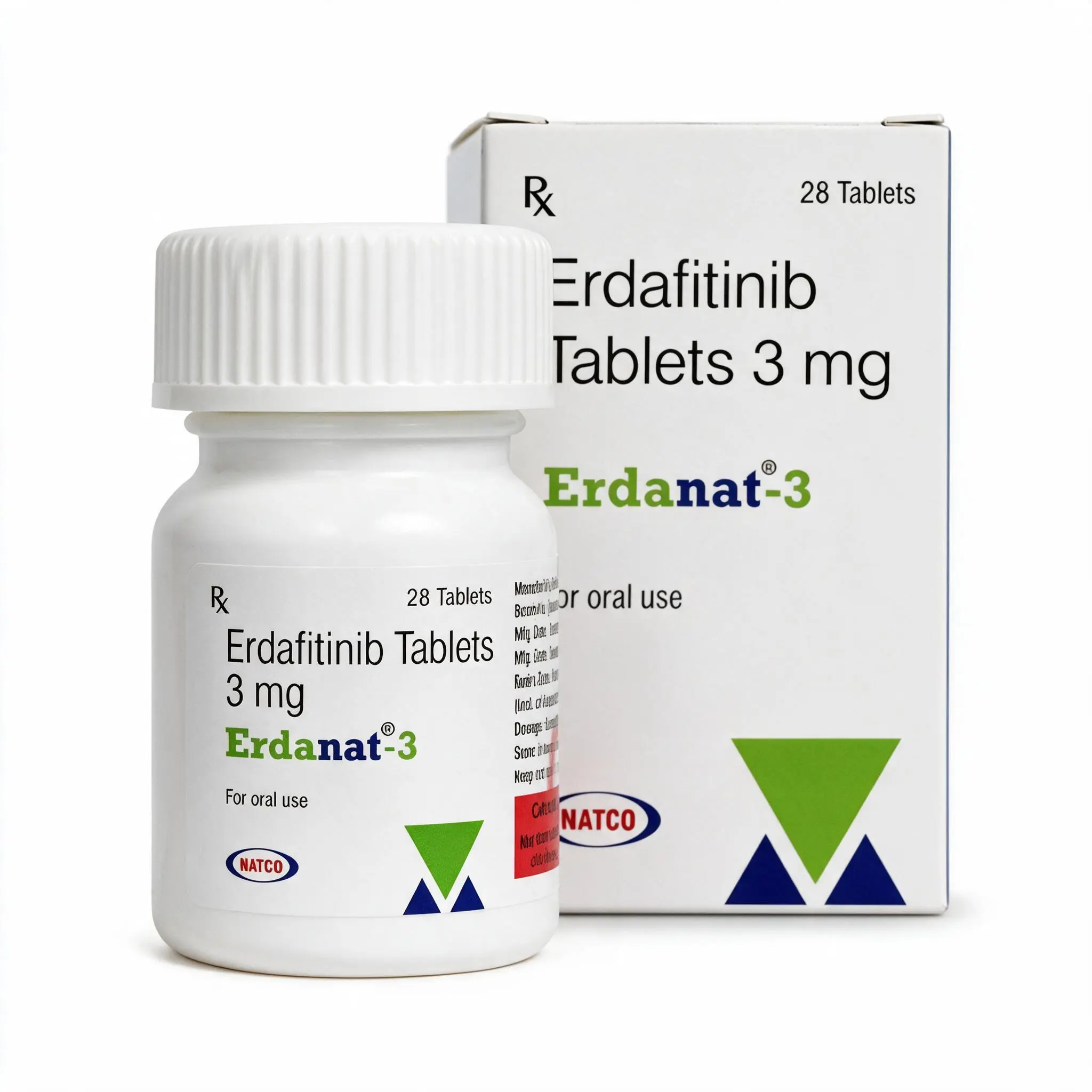
Erdanat-3 — Erdafitinib 3 mg Tablets, 28 Tablets

9745 11264 -13% On order · from 20 days

Erdanat-3 is an innovative, highly selective next-generation antineoplastic targeted medication designed for precision cancer therapy. The active pharmaceutical ingredient of the medication is Erdafitinib in a 3 mg dosage. Erdanat-3 is developed and manufactured by the leading Indian pharmaceutical enterprise Natco Pharma Ltd., globally recognized for its rigorous manufacturing quality standards in oncology. Erdanat-3 belongs to the pharmacotherapeutic group of receptor tyrosine kinase inhibitors, specifically acting as a potent pan-FGFR (Fibroblast Growth Factor Receptor) inhibitor.

Erdanat-3 is specifically engineered for the pathogenetic management of patients with locally advanced or metastatic urothelial carcinoma (bladder and urinary tract cancer) harboring specific susceptible FGFR2 or FGFR3 genetic alterations (mutations or fusions). By inhibiting aberrant FGFR signaling pathways, Erdafitinib blocks downstream cascades that drive uncontrolled tumor cell proliferation and survival. The production of Erdanat-3 by Natco Pharma takes place at state-of-the-art certified facilities fully compliant with international Good Manufacturing Practice (GMP) standards and US FDA regulations, guaranteeing complete bioequivalence and safety alignment with the reference product Balversa.

Key Advantages and Pharmacological Features of Erdanat-3:

  • Targeted FGFR Inhibition: Potently and selectively inhibits the enzymatic activity of FGFR1, FGFR2, FGFR3, and FGFR4, preventing autophosphorylation and halting tumor progression.
  • Precision Oncology Solution: Indicated based on biomarker testing (FGFR3/FGFR2 mutations or fusions), delivering optimal therapeutic efficacy in patients progressing after platinum-based chemotherapy or immunotherapy.
  • Convenient Oral Administration: Supplied as film-coated tablets for oral intake (28 tablets per bottle), enabling convenient outpatient treatment without requiring routine intravenous infusions.
  • Flexible Dose Titration: The 3 mg tablet strength allows precise individual dose adjustments (e.g., dose escalation from 8 mg to 9 mg daily or dose reduction for adverse event management) based on serum phosphate monitoring.
  • Natco Pharma Quality Guarantee: High chemical purity, strict counterfeit protection, and world-class oncology care accessibility.

Erdanat-3 is supplied in a modern solid oral dosage form for internal administration:

  • Presentation and Packaging: 1 original white high-density polyethylene (HDPE) bottle with a child-resistant closure containing 28 film-coated tablets. Each bottle, along with a comprehensive package leaflet, is enclosed in an outer cardboard box featuring Natco security seals.
  • Active Ingredient:
    • Erdafitinib — 3 mg in each film-coated tablet.
  • Excipients: Mannitol, microcrystalline cellulose, croscarmellose sodium, magnesium stearate, colloidal anhydrous silica, hydroxypropyl methylcellulose (hypromellose), titanium dioxide, macrogol/polyethylene glycol, purified talc, colorants (yellow iron oxide / red iron oxide).

Pharmacodynamics: Erdafitinib is a small-molecule, oral pan-inhibitor of Fibroblast Growth Factor Receptor (FGFR1, FGFR2, FGFR3, and FGFR4) tyrosine kinases. In cancer cells harboring FGFR alterations (such as FGFR3 point mutations R248C, S249C or FGFR3-TACC3 fusions), constitutive activation of downstream signaling pathways (RAS-RAF-MEK-ERK and PI3K-AKT) drives malignant transformation. Erdafitinib binds to the ATP-binding site of the FGFR kinase domain, inhibiting receptor autophosphorylation, blocking downstream signal transduction, reducing tumor cell proliferation, and inducing apoptosis.

Pharmacokinetics: Following oral administration, Erdafitinib is rapidly absorbed from the gastrointestinal tract, reaching peak plasma concentration (Cmax) in approximately 2 to 4 hours. Food co-administration does not exert a clinically meaningful effect on absorption. Plasma protein binding (primarily to albumin and alpha-1-acid glycoprotein) is approximately 99.5%. Erdafitinib undergoes extensive hepatic metabolism mediated predominantly by CYP2C9 and CYP3A4 enzymes. The terminal elimination half-life (T1/2) is approximately 50 to 60 hours, supporting steady-state plasma concentrations with once-daily dosing. Elimination occurs primarily via feces (approx. 69%) and urine (approx. 19%).

Erdanat-3 is indicated for the treatment of adult patients under the following clinical conditions:

  • 🔹 Locally Advanced or Metastatic Urothelial Carcinoma: Monotherapy for the treatment of adult patients with unresectable, locally advanced, or metastatic urothelial carcinoma that has susceptible FGFR3 or FGFR2 genetic alterations (determined by an FDA-approved diagnostic test).
  • 🔹 Disease Progression After Prior Systemic Therapy: Patients whose disease has progressed during or following at least one line of prior platinum-containing chemotherapy (including within 12 months of neoadjuvant or adjuvant chemotherapy) or prior targeted/immunotherapy.

Administration of Erdanat-3 must be conducted under the supervision of a physician experienced in cancer therapies:

  • 👨‍⚕️ Initial Dosing Regimen: The recommended starting dose of Erdafitinib is 8 mg once daily (e.g., two 4 mg tablets or appropriate dose combination) taken orally at the same time each day. The 3 mg tablet strength is utilized for individualized dose titration, escalation, or reduction.
  • 👨‍⚕️ Dose Escalation Based on Serum Phosphate: Serum phosphate levels should be evaluated 14 to 21 days after initiating treatment. If serum phosphate is <5.5 mg/dL (1.78 mmol/L) and no treatment-related adverse reactions are present, increase the dose to 9 mg once daily (three Erdanat-3 3 mg tablets).
  • 👨‍⚕️ Administration Instructions: Tablets should be swallowed whole with a full glass of water. Do not crush, chew, or split tablets. May be taken with or without food.
  • 🥤 Treatment Duration: Therapy should continue until disease progression or unacceptable toxicity occurs.

Erdanat-3 is strictly contraindicated in patients with the following conditions:

  • ❌ Known hypersensitivity or severe allergic reaction to Erdafitinib or any of the excipients in the tablet formulation.
  • ❌ Pregnancy and breastfeeding (high risk of embryo-fetal toxicity and teratogenicity).
  • ❌ Pediatric population under 18 years of age (safety and efficacy have not been established).
  • ❌ Severe hepatic impairment (Child-Pugh Class C).
  • ❌ Severe renal impairment (creatinine clearance <30 mL/min or end-stage renal disease on hemodialysis).

Erdafitinib is extensively metabolized by hepatic cytochrome P450 enzymes, requiring clinical vigilance during concomitant drug administration:

  • ⚠️ Strong CYP2C9 and CYP3A4 Inhibitors: Co-administration with ketoconazole, itraconazole, or clarithromycin increases Erdafitinib plasma exposure, raising toxicity risk. Avoid concurrent use or adjust Erdanat-3 dosage.
  • ⚠️ Strong CYP2C9 and CYP3A4 Inducers: Rifampin, phenytoin, carbamazepine, and St. John's wort significantly decrease Erdafitinib plasma levels, reducing clinical efficacy. Concomitant use should be avoided.
  • ⚠️ P-glycoprotein (P-gp) Substrates: Erdafitinib may inhibit intestinal P-gp. Co-administration with digoxin requires therapeutic drug monitoring.
  • ⚠️ Phosphate-Altering Agents: Avoid co-administration of agents that alter serum phosphate levels prior to the initial phosphate evaluation window (Days 14–21).

Erdanat-3 exhibits potent teratogenic and embryo-fetal lethal properties:

  • 🤰 Pregnancy: Erdanat-3 is contraindicated during pregnancy. It can cause fetal harm when administered to a pregnant woman. Pregnancy testing is mandatory for females of reproductive potential prior to initiating treatment.
  • 🛡️ Contraception: Females of reproductive potential must use effective contraception during Erdanat-3 therapy and for 1 month after the final dose. Male patients with female partners of reproductive potential must use effective barrier contraception during treatment and for 1 month after the last dose.
  • 🤱 Lactation: It is unknown whether Erdafitinib is excreted in human milk. Breastfeeding must be discontinued during treatment with Erdanat-3 and for 1 month following the last dose.

Treatment with Erdanat-3 requires routine clinical monitoring to manage potential adverse reactions:

  • 🔴 Ocular Disorders: Central serous retinopathy / retinal pigment epithelium detachment (dry eyes, blurred vision, visual field defects). Routine ophthalmologic examinations are required.
  • 🟡 Metabolic Disturbances: Hyperphosphatemia (elevated serum phosphate levels, serving as a pharmacodynamic marker), hyponatremia, hypophosphatemia.
  • 🟠 Dermatologic Reactions: Palmar-plantar erythrodysesthesia syndrome (hand-foot syndrome), dry skin, alopecia, nail disorders (onycholysis, paronychia).
  • 🟢 Gastrointestinal Effects: Stomatitis (mucosal inflammation), dry mouth, diarrhea, nausea, decreased appetite, dysgeusia (taste alteration).
  • 🔵 Laboratory & General Symptoms: Increased ALT, AST, alkaline phosphatase levels; fatigue, asthenia, arthralgia, and myalgia.

Clinical data regarding acute Erdanat-3 overdose are limited:

  • Symptoms: Administration of higher than recommended doses exacerbates pharmacological side effects, primarily severe hyperphosphatemia, extensive stomatitis, ocular dryness, and severe nail dystrophy.
  • Management: There is no specific antidote for Erdafitinib. In case of overdose, immediately discontinue Erdanat-3, perform gastric lavage if recently ingested, administer oral phosphate binders (for hyperphosphatemia), and initiate supportive care. Hemodialysis is ineffective due to high plasma protein binding.

Storage instructions for Erdanat-3 tablets:

  • Temperature Control: Store in the original container at temperatures not exceeding 25 °C in a dry place protected from direct sunlight.
  • Moisture Protection: Keep the bottle tightly closed after opening. Do not remove the desiccant canister from the bottle.
  • Safety: Store out of the reach and sight of children and domestic animals.
  • Shelf Life: 2 years (24 months) from the date of manufacture. Do not use after the expiration date printed on the package.

Verification guidelines for genuine Erdanat-3 tablets manufactured by Natco Pharma Ltd.:

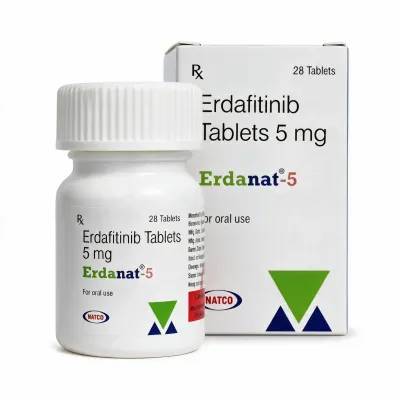
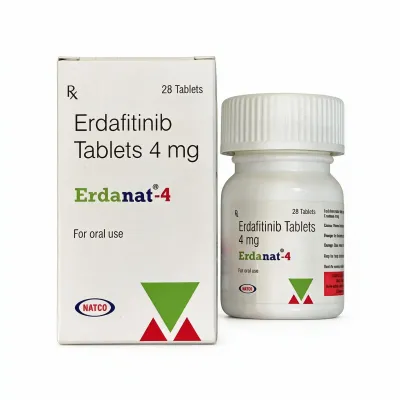
  • Packaging & Typography: The outer carton and HDPE bottle display Natco's official corporate styling. Crisp text prominently displays Erdanat®-3 (with a green numeral "3" and geometric green/blue triangles), Erdafitinib Tablets 3 mg, quantity 28 Tablets, and For oral use.
  • Manufacturer Logo: The official oval NATCO logo (red lettering inside a blue oval) is clearly printed on both the bottle label and carton front.
  • Batch Details: The carton side flap and bottle label feature laser-printed or inkjet details: Batch No., Mfg Date, Expiry Date, and Maximum Retail Price (M.R.P.).
  • Tamper-Evident Seal: The HDPE bottle features a child-resistant cap with a tamper-evident breakable ring and an inner induction foil seal over the bottle neck.

Notice. The information on this page is for reference only and does not replace medical consultation. Always consult a healthcare professional and read the manufacturer's instructions before using any medicine. Self-medication may be dangerous. Information updated: 26.08.2026

Active ingredient
Dosage form Film-coated tablets
Tablets per pack 28
Packaging Plastic bottle in a box
On order · from 20 days
100% original product
Delivery across Ukraine
1
Alternatives

Similar products

Customer reviews

What Customers Say

No reviews yet

Your review can be the first!

Contact us

Choose a convenient way to contact

We work daily from 9:00 to 20:00