
Buy Carfilzomib (Kyprolis) online

Price: 4,515 UAH

Known as original brand(s)

Kyprolis

Buy Carfilzomib (Kyprolis) online with delivery. Browse medicines that contain Carfilzomib, compare doses and prices.

Carfilzomib is a tetrapeptide epoxyketone that acts as a potent, selective, and irreversible proteasome inhibitor, originally marketed under the brand name Kyprolis. It is a targeted antineoplastic agent utilized in hematologic oncology for the treatment of relapsed or refractory multiple myeloma.

The mechanism of action of carfilzomib involves the selective binding and irreversible inhibition of the chymotrypsin-like activity of the 20S proteasome (a component of the ubiquitin-proteasome pathway). This leads to intracellular accumulation of polyubiquitinated proteins, cell cycle arrest, apoptosis, and cessation of myeloma cell proliferation. Unlike bortezomib, carfilzomib exhibits higher target specificity and irreversible binding, resulting in a significantly lower incidence of peripheral neuropathy.

Clinical administration of carfilzomib (frequently combined with dexamethasone and immunomodulatory agents) achieves deep and durable remissions in heavily pretreated multiple myeloma patients.
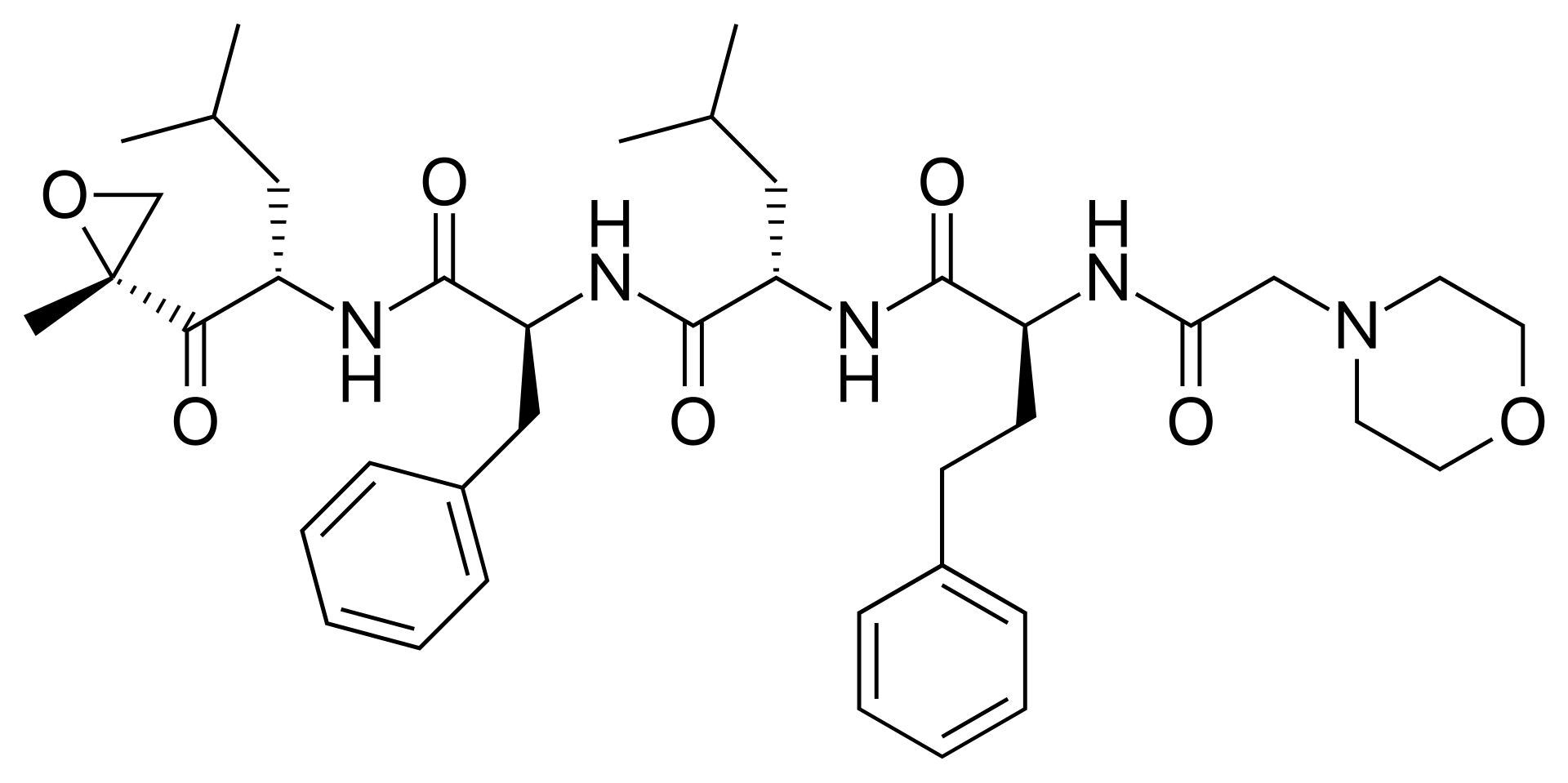
Wikipedia page
Carfilzomib (Kyprolis)

Indications

Carfilzomib is indicated in clinical hematology for the following conditions:

  • Relapsed/Refractory Multiple Myeloma: Treatment of adult patients with multiple myeloma who have received 1 to 3 prior lines of therapy (in combination with dexamethasone, or lenalidomide and dexamethasone, or daratumumab).
  • Monotherapy: Treatment of patients with relapsed and refractory multiple myeloma who have progressed after at least two prior therapies (including bortezomib and an immunomodulatory agent).

Dosage and administration

Carfilzomib is administered exclusively via intravenous infusion in a specialized clinical setting:

  • Recommended Regimen (in combination with dexamethasone): 20 mg/m² on Days 1 and 2 of Cycle 1 (administered as a 10-minute infusion); if tolerated, the dose is escalated to 27 mg/m² (or 56 mg/m² once-weekly schedule) in subsequent days and cycles.
  • Cycle Schedule: Administered in 21-day cycles (Days 1, 2, 8, 9, 15, 16) or 28-day cycles depending on the specific protocol.
  • Premedication: Dexamethasone must be administered orally or intravenously prior to each dose in Cycle 1 and as needed in subsequent cycles to mitigate infusion-related reactions.
  • Monitoring: Complete blood counts, serum biochemistry (renal and hepatic function), and cardiovascular assessments are mandatory prior to each dose.
Carfilzomib is contraindicated in the following cases:

  • Hypersensitivity: Known hypersensitivity to carfilzomib or any formulation excipients.
  • Severe Heart Failure: Significant cardiac impairment (New York Heart Association Class III–IV heart failure), recent myocardial infarction, or uncontrolled arrhythmias.
  • Pregnancy and Lactation: Pregnancy and breastfeeding periods due to embryofetal toxicity.
  • Pediatric Use: Safety and efficacy in pediatric patients under 18 years of age have not been established.

Treatment with carfilzomib may cause the following adverse reactions:

  • Cardiovascular: Cardiac failure, hypertension, myocardial ischemia, pulmonary edema, and arrhythmias.
  • Hematologic: Thrombocytopenia, anemia, neutropenia, and lymphopenia.
  • Infections: Upper respiratory tract infections, pneumonia, and herpes zoster reactivation.
  • Gastrointestinal: Diarrhea, nausea, vomiting, constipation, and decreased appetite.
  • Nervous System: Peripheral neuropathy (significantly lower incidence compared to bortezomib), headache, fatigue, and dyspnea.
  • Laboratory Abnormalities: Elevated serum creatinine, transaminases, and bilirubin levels.

Frequently Asked Questions

Carfilzomib is a potent second-generation tetrapeptide epoxyketone proteasome inhibitor that selectively and irreversibly binds to the threonine active sites of the 20S proteasome. Inhibition of the proteasome complex leads to the intracellular accumulation of polyubiquitinated proteins, triggering cellular stress, cell cycle arrest, and apoptosis. Malignant plasma cells are highly sensitive to proteostasis disruption due to their intensive synthesis and secretion of abnormal immunoglobulins. The drug exhibits high selectivity and does not significantly affect other proteases, ensuring high specificity of its cytotoxic action. Following intravenous administration, the active substance is rapidly cleared from the systemic circulation through metabolic cleavage by peptidases.
The primary indication for prescribing Carfilzomib is the treatment of relapsed or refractory multiple myeloma in adult patients who have received at least one prior line of therapy. The drug is successfully used in combination with dexamethasone or with lenalidomide plus dexamethasone to achieve a deep and sustained antitumor response. The medication effectively controls disease progression in patients resistant to other classes of antineoplastic agents. Therapy contributes to a significant increase in progression-free survival and improvement in the quality of life of cancer patients. The prescription of the drug is carried out exclusively by an oncologist or hematologist in a specialized inpatient setting.
Carfilzomib is administered exclusively intravenously as a slow infusion over ten to thirty minutes depending on the established treatment protocol. The drug is administered on a cyclical schedule, such as on two consecutive days weekly for three weeks followed by a one-week rest period. Dosage is calculated individually taking into account the patient's body surface area and therapy tolerance. Prior to each administration in the first cycle, premedication with dexamethasone is recommended to prevent acute infusion reactions. Unauthorized modification of the administration schedule or dosages is strictly prohibited to ensure safety and treatment efficacy.
During Carfilzomib treatment, patients may experience thrombocytopenia, anemia, neutropenia, fatigue, and gastrointestinal disturbances. Serious risks include cardiovascular complications such as heart failure, arterial hypertension, myocardial ischemia, and venous thromboembolism. To monitor cardiotoxicity, careful assessment of cardiac function and blood pressure is required before and during therapy. The development of acute renal failure and tumor lysis syndrome is also possible, requiring adequate patient hydration. If signs of dyspnea, edema, or decreased platelet counts occur, immediate medical consultation is necessary for dose adjustment.
Carfilzomib is metabolized primarily by peptidases and epoxide hydrolases, therefore significant pharmacokinetic drug interactions with cytochrome P450 inhibitors or inducers are unlikely. However, co-administration with strong CYP3A4 inducers may decrease the systemic exposure of the drug and reduce its therapeutic efficacy. The drug is contraindicated in patients with hypersensitivity to the active substance, severe hepatic and cardiac impairment, as well as during pregnancy and breastfeeding. Women of childbearing potential and men must use effective contraceptive methods during treatment and for several months following its completion. Prior to therapy initiation, the patient must undergo a comprehensive evaluation of the cardiovascular and excretory systems.

Medicines containing Carfilzomib

-8%
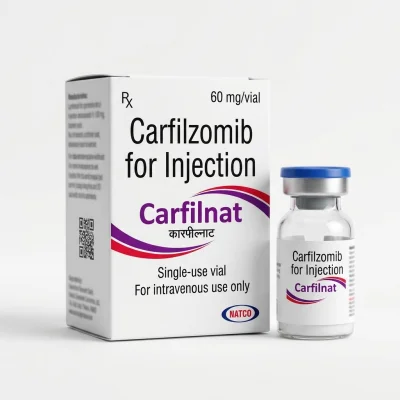
Carfilnat
View
Natco
60 mg 1 vial
4515₴ 4917₴
✅ All products loaded (1)

Contact us

Choose a convenient way to contact

We work daily from 9:00 to 20:00