
Buy Deferasirox (Exjade) online

Price: from 849 to 2,548 UAH

Known as original brand(s)

Exjade

Buy Deferasirox (Exjade) online with delivery. Browse medicines that contain Deferasirox, compare doses and prices.

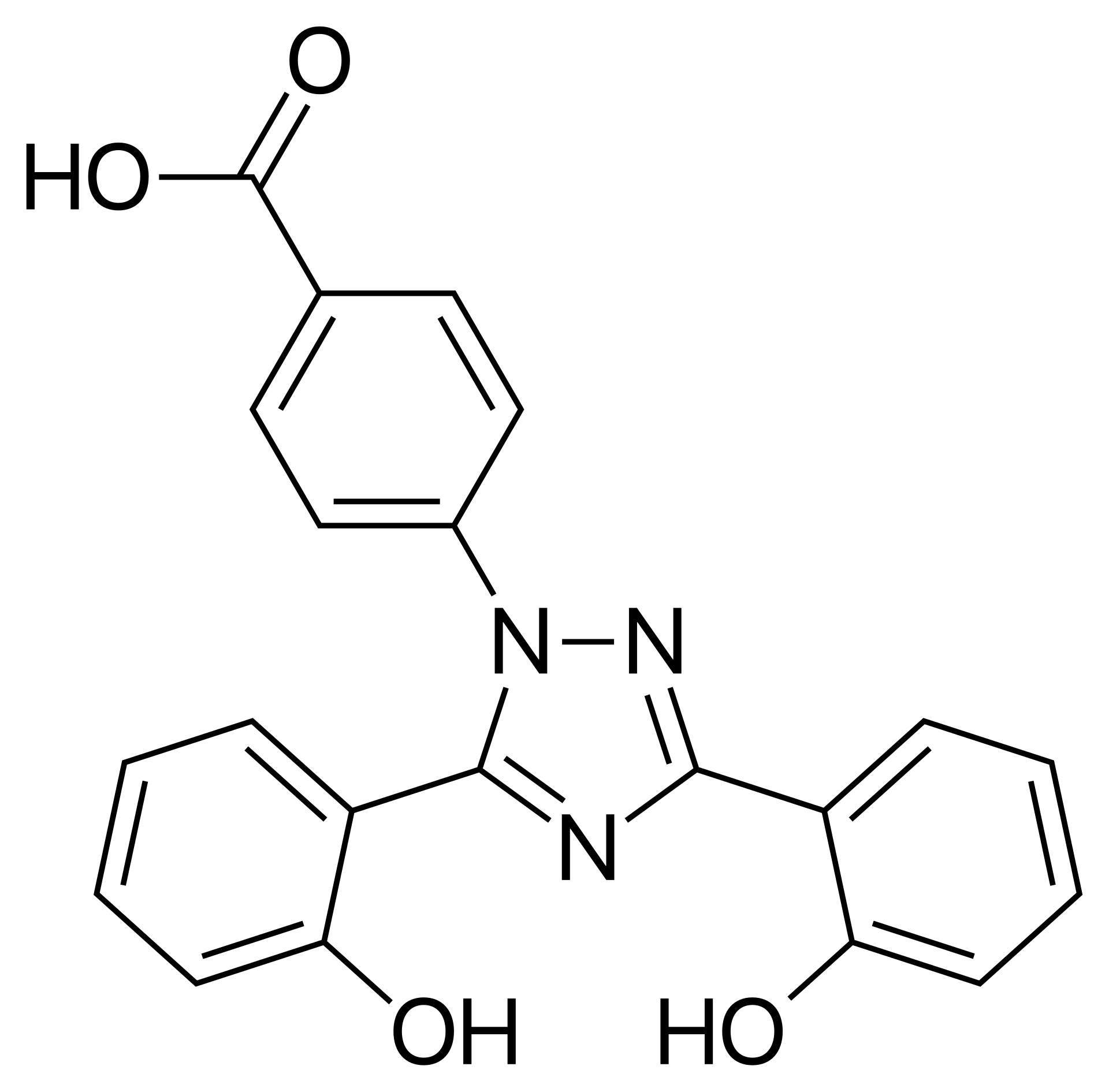
Deferasirox is an oral tridentate iron chelator originally marketed under the brand name Exjade (and as film-coated tablets under the brand name Jadenu). It is designed to remove excess iron from the body in patients with chronic iron overload resulting from regular blood transfusions (transfusional hemosiderosis).

The mechanism of action of deferasirox involves high-affinity and selective binding to trivalent iron (Fe3+) in a 2:1 ratio to form a stable complex, which is excreted predominantly via feces and partially through urine. The drug effectively reduces iron burden in the liver, heart, and other tissues, preventing severe organ dysfunction.

Clinical administration of deferasirox maintains safe serum ferritin levels in patients with thalassemia, myelodysplastic syndromes, and other hematologic disorders requiring chronic transfusion therapy.
Wikipedia page
Deferasirox (Exjade)

Indications

Deferasirox is indicated in hematology and clinical practice for the following conditions:

  • Transfusional Iron Overload: Treatment of chronic iron overload due to frequent blood transfusions in patients with beta-thalassemia major aged 6 years and older, as well as other anemias and myelodysplastic syndromes.
  • Non-Transfusional Iron Overload: Treatment of chronic iron overload in patients with non-transfusion-dependent thalassemia syndromes aged 10 years and older when deferoxamine therapy is contraindicated or inadequate.

Dosage and administration

Deferasirox is administered orally once daily, strictly on an empty stomach or 30 minutes before a light meal:

  • Dispersible Tablets (Exjade): Initial daily dose is typically 20 mg/kg body weight. Tablets must be fully dispersed in water, apple juice, or orange juice (do not use carbonated beverages or milk).
  • Film-Coated Tablets (Jadenu): Bioequivalent formulation swallowed whole with water (dose is approximately 70% of dispersible tablets, starting at 14 mg/kg/day).
  • Dose Adjustments: Adjusted every 3 to 6 months based on serum ferritin trends and iron excretion goals.
  • Monitoring: Regular monitoring of serum ferritin, serum creatinine, creatinine clearance, liver function tests, and urine protein.
Deferasirox is contraindicated in the following cases:

  • Renal Impairment: Severe renal impairment (creatinine clearance less than 60 mL/min or serum creatinine above age-adjusted normal limits).
  • Severe Pathologies: Severe hepatic impairment, thrombocytopenia (platelet count below 50,000/mcL), or advanced malignancies.
  • Hypersensitivity: Known hypersensitivity to deferasirox or any formulation excipients.
  • Pregnancy and Lactation: Pregnancy and breastfeeding periods unless strictly necessary.

Treatment with deferasirox may cause the following adverse reactions:

  • Gastrointestinal: Nausea, vomiting, diarrhea, abdominal pain, dyspepsia, and transient liver transaminase elevations.
  • Renal System: Serum creatinine increases, proteinuria, and renal tubular disorders.
  • Nervous System: Headache, dizziness, and fatigue.
  • Dermatologic: Rash, pruritus, and urticaria.
  • Special Senses: Rare reports of high-frequency hearing loss and lens opacities (cataracts) with long-term use.

Frequently Asked Questions

Deferasirox is an orally active, highly selective iron chelator. Its chemical structure features a tridentate ligand that binds avidly to ferric (trivalent) iron ions in a 2:1 ratio to form stable, water-soluble coordination complexes. The drug selectively mobilizes and sequesters excess tissue iron—primarily accumulated in the liver and reticuloendothelial system due to chronic blood transfusions—allowing the iron-deferasirox complex to be excreted predominantly through the feces via bile, and partially via renal elimination. This mechanism protects vital organs from iron-mediated oxidative stress and toxicity.
Deferasirox is indicated for the treatment of chronic iron overload resulting from frequent, recurrent blood transfusions in patients with hemoglobinopathies such as beta-thalassemia major, myelodysplastic syndromes, sickle cell disease, and other congenital or acquired anemias. Furthermore, it is prescribed for chronic iron overload in patients with non-transfusion-dependent thalassemia (NTDT) syndromes who have elevated liver iron concentrations and clinical evidence of iron toxicity.
Deferasirox dispersible tablets must be taken orally once daily on an empty stomach, at least 30 minutes before food (preferably at the same time each day). The tablets must not be swallowed whole, chewed, or crushed. Instead, they must be completely dispersed by stirring in a glass of water, orange juice, or apple juice to form a uniform suspension. After drinking the suspension, any residue should be rinsed with a small amount of liquid and swallowed to ensure the full dose is received. Dosing is calculated strictly on a milligrams-per-kilogram body weight basis by the treating physician.
Deferasirox therapy carries a risk of renal and hepatic impairment, making regular clinical and laboratory monitoring mandatory. Serum creatinine clearance and blood urea nitrogen must be assessed prior to initiation, and renal function must be monitored monthly. Similarly, hepatic transaminases and total bilirubin levels must be tracked routinely. Periodic urinalysis to detect proteinuria is also recommended, particularly in patients with pre-existing renal vulnerabilities. If laboratory parameters exceed safety thresholds, clinicians must reduce the dose or temporarily suspend treatment.
Common adverse reactions associated with deferasirox include gastrointestinal disturbances such as abdominal pain, nausea, vomiting, diarrhea, and dyspepsia. Mild-to-moderate skin rashes can also occur. Less frequently, long-term chelation therapy has been associated with auditory disturbances (high-frequency hearing loss) and ocular changes (lens opacities and early cataracts); consequently, baseline and annual ophthalmological and audiometric evaluations are strongly recommended during prolonged therapy.

Medicines containing Deferasirox

-10%
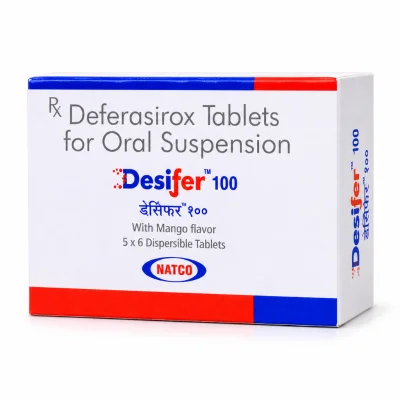
Desifer 100
View
Natco
100 mg 30 tablets
849₴ 939₴
-8%
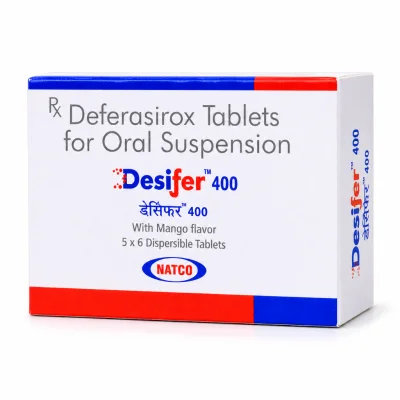
Desifer 400
View
Natco
400 mg 30 tablets
2548₴ 2771₴
✅ All products loaded (2)

Contact us

Choose a convenient way to contact

We work daily from 9:00 to 20:00