
Buy Eribulin (Halaven) online

Price: 8,717 UAH

Known as original brand(s)

Halaven

Buy Eribulin (Halaven) online with delivery. Browse medicines that contain Eribulin, compare doses and prices.

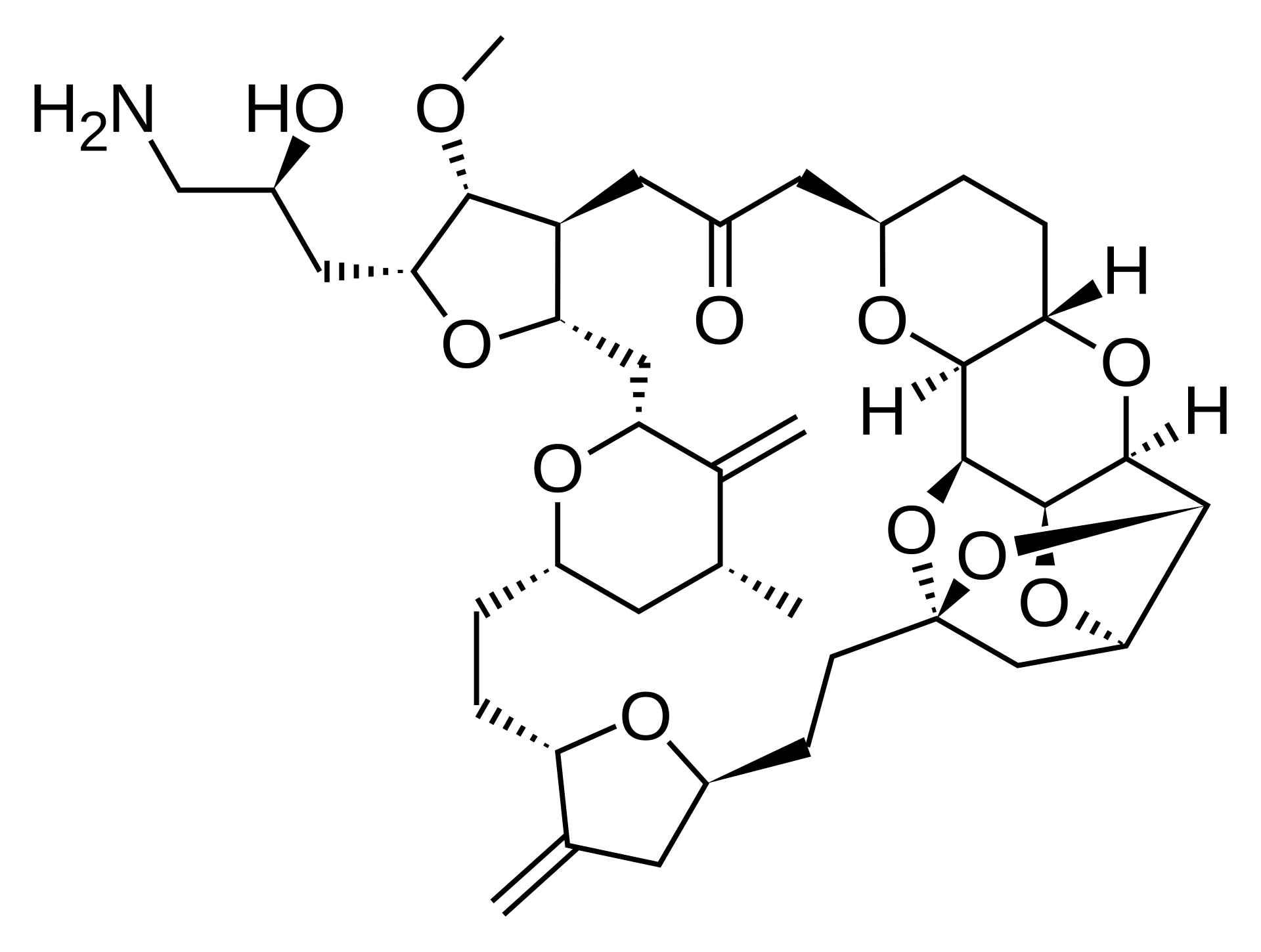
Eribulin is a synthetic macrocyclic ketone analog of halichondrin B (a polyether macrolide originally isolated from the marine sponge Halichondria okadai), marketed under the brand name Halaven. It belongs to the class of microtubule dynamics inhibitors and is indicated in oncology for metastatic breast cancer and unresectable liposarcoma.

The mechanism of action of eribulin is distinct from other tubulin-targeting agents: it inhibits the growth phase of microtubules without affecting shortening, sequesters tubulin into non-productive aggregates, and induces irreversible cell cycle arrest at the G2/M phase, ultimately leading to apoptotic cell death. Furthermore, eribulin remodels tumor vasculature, improving blood perfusion and reducing hypoxia and metastatic potential.

Clinical administration of eribulin significantly improves overall survival in heavily pretreated patients with metastatic breast cancer and soft tissue sarcomas.
Wikipedia page
Eribulin (Halaven)

Indications

Eribulin is indicated in clinical oncology for the following applications:

  • Breast Cancer: Treatment of patients with locally advanced or metastatic breast cancer who have progressed after at least two prior chemotherapy regimens for advanced disease (prior therapy should have included an anthracycline and a taxane unless contraindicated).
  • Soft Tissue Sarcoma: Treatment of patients with unresectable liposarcoma who have received prior anthracycline-containing therapy.

Dosage and administration

Eribulin is administered intravenously in a specialized oncology setting:

  • Recommended Dosage: 1.4 mg/m² body surface area administered as an intravenous injection over 2 to 5 minutes on Days 1 and 8 of a 21-day cycle.
  • Dose Modifications: In case of severe neutropenia (Grade 4 or febrile neutropenia) or thrombocytopenia, dosing on Day 8 may be delayed and subsequent doses reduced to 1.1 mg/m² or 0.7 mg/m².
  • Organ Impairment: Dose reductions are required for patients with mild or moderate hepatic or renal impairment.
  • Monitoring: Complete blood counts must be monitored prior to each dose administration.
Eribulin is contraindicated in the following cases:

  • Hypersensitivity: Known hypersensitivity to eribulin mesylate or any formulation excipients.
  • Pregnancy and Lactation: Pregnancy and breastfeeding periods due to embryofetal toxicity.
  • Pediatric Use: Safety and efficacy in pediatric patients under 18 years of age have not been established.

Treatment with eribulin may cause the following adverse reactions:

  • Hematologic: Neutropenia (including febrile neutropenia), leukopenia, anemia, and thrombocytopenia.
  • Nervous System: Peripheral neuropathy (paresthesia, numbness), headache, fatigue, and asthenia.
  • Gastrointestinal: Nausea, vomiting, constipation, diarrhea, stomatitis, and decreased appetite.
  • Dermatologic: Alopecia and dry skin.
  • Musculoskeletal: Arthralgia, myalgia, pain in extremities, and back pain.
  • Cardiovascular: QT interval prolongation on ECG and tachycardia.

Frequently Asked Questions

Eribulin is a non-taxane microtubule dynamics inhibitor that is a synthetic analog of halichondrin B, a natural compound isolated from marine sponges. Its mechanism of action is distinct from other tubulin-targeting agents: eribulin selectively binds to the growing (+)-ends of microtubules to inhibit their growth phase without affecting the shortening phase. This results in irreversible tubulin sequestration into non-functional aggregates, disruption of the mitotic spindle, cell cycle arrest at the G2/M phase, and subsequent apoptotic cell death. Additionally, eribulin promotes tumor vascular remodeling and reverses the epithelial-mesenchymal transition (EMT).
Eribulin is indicated for the treatment of patients with locally advanced or metastatic breast cancer who have progressed after receiving at least one prior chemotherapeutic regimen for advanced disease (which should have included an anthracycline and a taxane). It is also approved for the treatment of patients with unresectable or metastatic liposarcoma who have received a prior anthracycline-containing regimen.
Eribulin is administered intravenously under direct medical supervision. The standard clinical regimen is a 2- to 5-minute intravenous push or short infusion given on Days 1 and 8 of a 21-day cycle. The solution can be administered undiluted or diluted in 0.9% sodium chloride injection. Dosing adjustments (reductions) are mandatory in patients with pre-existing mild or moderate hepatic impairment or moderate-to-severe renal impairment.
Like other microtubule-disrupting agents, eribulin commonly induces peripheral sensory neuropathy, characterized by numbness, tingling, burning sensations, or pain in the hands and feet. Patients must be clinically evaluated for peripheral neuropathy prior to each dose. If Grade 3 or Grade 4 peripheral neuropathy develops, treatment should be withheld until resolution to Grade 2 or lower, followed by a permanent dose reduction for subsequent cycles.
The primary dose-limiting toxicity of eribulin is neutropenia, which increases the risk of febrile neutropenia and severe infections. Complete blood counts must be evaluated prior to each administration on Days 1 and 8. Other common adverse events include anemia, fatigue, alopecia, nausea, constipation or diarrhea, anorexia, and arthralgia. If severe neutropenia occurs, dosing must be delayed until absolute neutrophil counts recover, and granulocyte colony-stimulating factors (G-CSF) may be administered supportively.

Medicines containing Eribulin

-7%
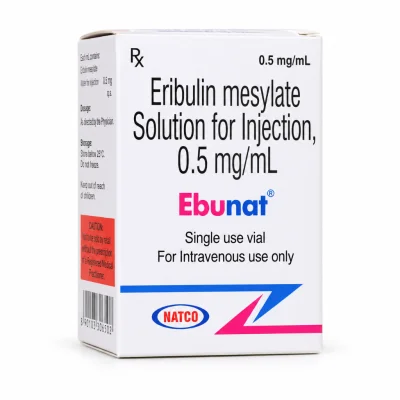
Ebunat
View
Natco
1 mg/2 ml 1 vial
8717₴ 9387₴
✅ All products loaded (1)

Contact us

Choose a convenient way to contact

We work daily from 9:00 to 20:00