
Nilotinib (Tasigna): Medical Guide for Ph+ CML Therapy

Known as original brand(s)

Tasigna

Nilotinib is a potent, selective Bcr-Abl tyrosine kinase inhibitor originally marketed under the brand name Tasigna. It was developed to treat Philadelphia chromosome-positive chronic myeloid leukemia (Ph+ CML) by targeting the causative genetic protein defect.

The mechanism of action involves competitive inhibition at the ATP-binding site of the BCR-ABL protein, as well as inhibition of KIT and PDGFR receptor tyrosine kinases. Nilotinib suppresses cell proliferation and triggers apoptosis in leukemic cell lines and fresh Philadelphia chromosome-positive cells, retaining significant activity against most imatinib-resistant mutations.

Clinical administration of nilotinib achieves deep cytogenetic and molecular responses, substantially lowering the risk of disease progression to accelerated or blast phases.

Wikipedia page
Nilotinib

Indications

Nilotinib is indicated in hematology and oncology for the following conditions:

  • Newly Diagnosed Ph+ CML: Treatment of adult and pediatric patients with newly diagnosed Philadelphia chromosome-positive chronic myeloid leukemia in the chronic phase.
  • Resistant or Intolerant Ph+ CML: Treatment of Ph+ CML in chronic or accelerated phase in patients resistant to or intolerant of prior therapy including imatinib.

Dosage and administration

Nilotinib capsules are intended for oral administration strictly under the guidance of a specialist in hematology:

  • Recommended Dosage: 300 mg twice daily for newly diagnosed CML in chronic phase; 400 mg twice daily for patients with resistance or intolerance to prior therapy.
  • Administration Rules: Doses should be taken approximately 12 hours apart. Nilotinib MUST be taken on an empty stomach (at least 1 hour before or 2 hours after food intake).
  • Dietary Precautions: Swallow capsules whole with water. Food significantly increases bioavailability, which can dangerously elevate plasma concentrations and toxicity risk. Avoid grapefruit products.
  • Duration of Therapy: Treatment should be continued as long as the patient continues to experience clinical benefit.
Nilotinib is contraindicated in the following situations:

  • Long QT Interval: Long QT syndrome, uncorrected hypokalemia or hypomagnesemia.
  • Pregnancy & Lactation: Pregnancy and breastfeeding periods.
  • Hypersensitivity: Severe hypersensitivity to nilotinib or galactose/lactose intolerance.

Treatment with nilotinib may cause the following adverse reactions:

  • Cardiovascular: QT interval prolongation, arterial occlusive events, ischemic heart disease, and hypertension.
  • Hematologic: Thrombocytopenia, neutropenia, and anemia.
  • Gastrointestinal & Metabolic: Nausea, diarrhea, constipation, elevated serum lipase, hyperglycemia, and electrolyte imbalances.
  • Dermatologic: Rash, pruritus, alopecia, and dry skin.
  • General: Headache, fatigue, arthralgia, and myalgia.

Frequently Asked Questions

Nilotinib is a second-generation targeted tyrosine kinase inhibitor designed specifically for the treatment of chronic myeloid leukemia. It selectively binds to and inhibits the abnormal BCR-ABL tyrosine kinase protein—the pathological product of a chromosomal translocation that drives uncontrolled leukemic cell proliferation. By shutting down this signaling enzyme, nilotinib halts the division of cancer cells and induces apoptosis, achieving deep cytogenetic and molecular remissions.
Nilotinib is indicated for the treatment of adult and pediatric patients with Philadelphia chromosome-positive chronic myeloid leukemia in the chronic phase or accelerated phase. It is utilized both as a first-line therapy for newly diagnosed patients and as a second-line option for individuals who have developed resistance or intolerance to prior tyrosine kinase inhibitor therapies like imatinib. The medication helps achieve durable clinical remissions and prevents disease progression into advanced blast phases.
Nilotinib possesses a critical pharmacokinetic property: its systemic bioavailability is heavily altered by food intake. The capsules must be taken strictly on an empty stomach. Patients must not consume any food for at least 2 hours before taking the dose and for 1 hour afterward. Ingesting food, particularly high-fat meals, drastically increases the absorption of nilotinib into the bloodstream, which can cause dangerous spikes in drug concentration and heighten the risk of severe toxicity. Capsules must be swallowed whole with water and never opened or mixed with food.
Nilotinib is associated with significant cardiac risks, notably the prolongation of the QT interval on electrocardiograms, which can precipitate life-threatening ventricular arrhythmias such as torsades de pointes. Additionally, the drug carries a risk of arterial occlusive events, potentially restricting blood flow to the heart, brain, or lower extremities. Comprehensive baseline cardiac evaluations, including an ECG, are mandatory prior to treatment, followed by routine monitoring of electrocardiograms and serum electrolyte levels during therapy.
Patients receiving nilotinib require frequent blood monitoring to track hematologic recovery and detect adverse effects. Complete blood counts must be performed frequently during the initial months and monthly thereafter to monitor for myelosuppression, including neutropenia, thrombocytopenia, and anemia. Comprehensive metabolic panels are equally vital to monitor hepatic parameters (bilirubin and transaminases), pancreatic enzymes (amylase and lipase), and metabolic indices such as blood glucose and lipid profiles.

List of medicines by active substance

-8%
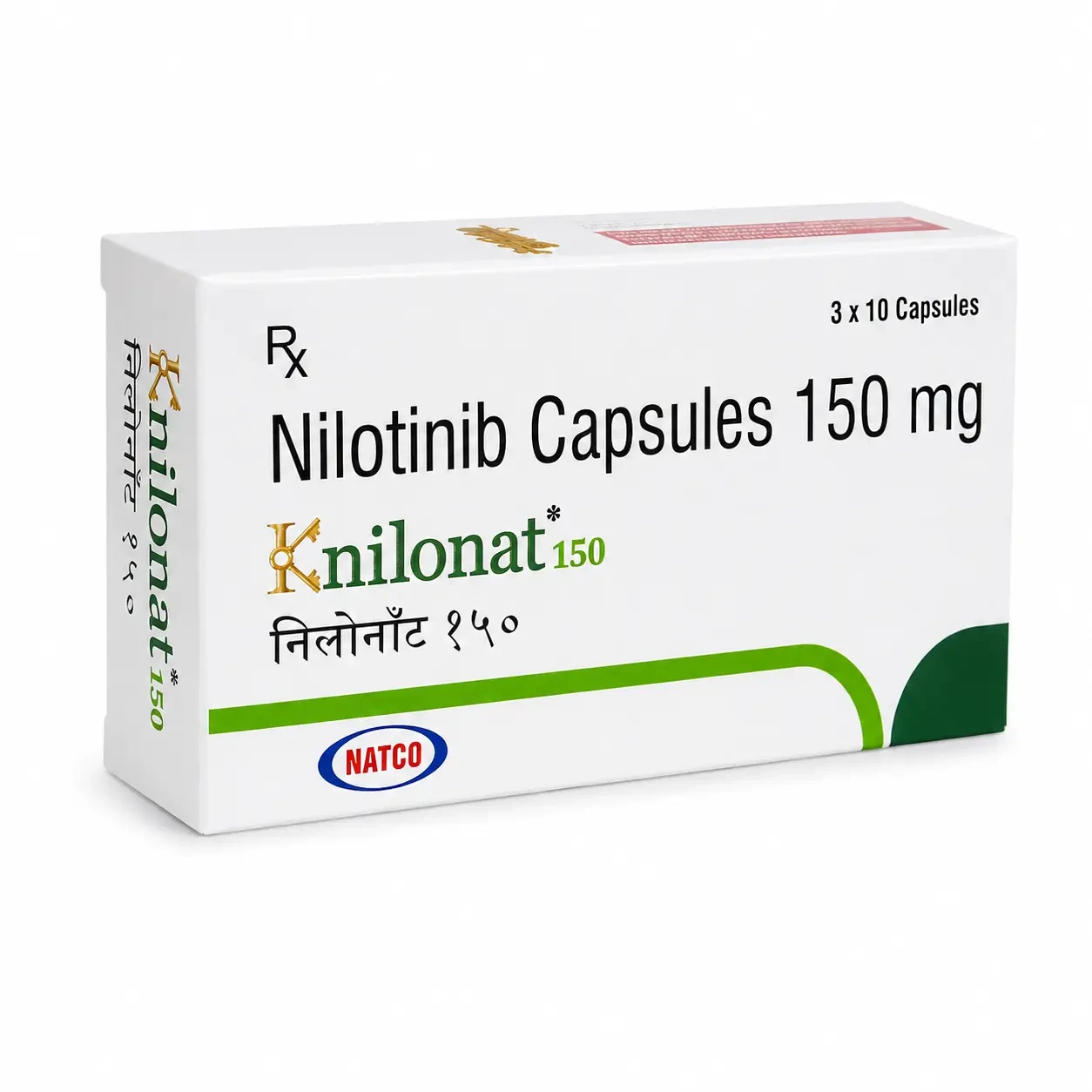
Knilonat 150
View
Natco
150 mg 30 capsules
8900₴ 9700₴
✅ All products loaded (1)

Contact us

Choose a convenient way to contact

We work daily from 9:00 to 20:00