
Buy Trabectedin (Yondelis) online

Price: 12,740 UAH

Known as original brand(s)

Yondelis

Buy Trabectedin (Yondelis) online with delivery. Browse medicines that contain Trabectedin, compare doses and prices.

Trabectedin is a synthetic antineoplastic agent originally derived from the marine tunicate Ecteinascidia turbinata, marketed under the brand name Yondelis. It is indicated in medical oncology for the management of advanced soft tissue sarcoma and relapsed ovarian cancer.

The mechanism of action of trabectedin involves binding to the minor groove of DNA, bending the helix toward the major groove. This disrupts DNA transcription, cell cycle kinetics, and DNA repair pathways (including TC-NER and HR). Furthermore, trabectedin modulates the tumor microenvironment by reducing the production of pro-inflammatory and angiogenic factors by tumor-associated macrophages (TAMs).

Clinical administration of trabectedin controls disease progression in liposarcomas, leiomyosarcomas, and platinum-sensitive ovarian carcinomas in patients previously treated with standard regimens.
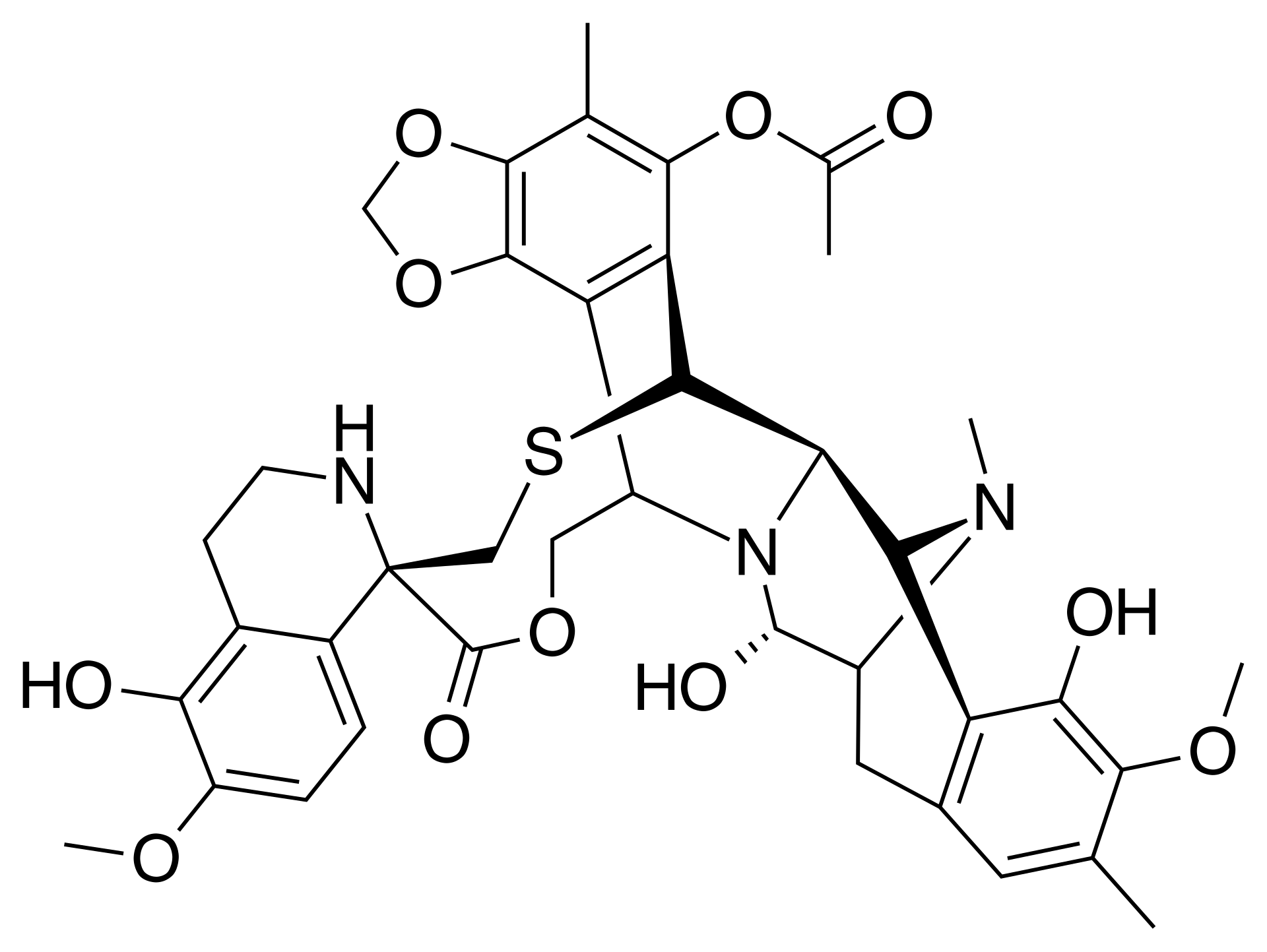
Wikipedia page
Trabectedin (Yondelis)

Indications

Trabectedin is indicated in clinical oncology for the following applications:

  • Soft Tissue Sarcoma: Treatment of adult patients with advanced soft tissue sarcoma (specifically liposarcoma and leiomyosarcoma) after failure of anthracyclines and ifosfamide, or who are unsuited to receive these agents.
  • Ovarian Cancer: Treatment of patients with relapsed platinum-sensitive ovarian cancer in combination with pegylated liposomal doxorubicin (PLD).

Dosage and administration

Trabectedin is administered strictly via a central venous catheter as an intravenous infusion in a specialized clinical setting:

  • Soft Tissue Sarcoma: The recommended dose is 1.5 mg/m² body surface area, administered as a 24-hour continuous IV infusion every 3 weeks (21 days).
  • Ovarian Cancer: The recommended dose is 1.1 mg/m² body surface area as a 3-hour IV infusion every 3 weeks immediately after pegylated liposomal doxorubicin.
  • Premedication (Mandatory): Intravenous dexamethasone (20 mg) must be administered 30 minutes prior to trabectedin to provide hepatoprotection and antiemetic prophylaxis.
  • Monitoring: Complete blood count (neutrophils and platelets) and liver function tests (ALT, AST, bilirubin, CPK) must be evaluated prior to each treatment cycle.
Trabectedin is contraindicated in the following cases:

  • Infections & Cytopenia: Severe active uncontrolled infections, baseline neutrophil count less than 1,500/mm³, or platelet count less than 100,000/mm³.
  • Hepatic Impairment: Severe hepatic impairment (elevated serum bilirubin or marked transaminase elevation).
  • Pregnancy & Lactation: Pregnancy and breastfeeding periods.
  • Hypersensitivity: Known hypersensitivity to trabectedin or any excipients.
  • Vaccination: Concomitant administration of yellow fever vaccine or live attenuated vaccines.

Treatment with trabectedin may cause the following adverse reactions:

  • Hematologic: Neutropenia, thrombocytopenia, anemia, and leukopenia.
  • Hepatic System: Transient elevations in ALT, AST, alkaline phosphatase, and serum bilirubin.
  • Gastrointestinal: Nausea, vomiting, anorexia, constipation, diarrhea, and stomatitis.
  • Musculoskeletal: Rhabdomyolysis (rare), myalgia, arthralgia, and elevated creatine phosphokinase (CPK).
  • General Disorders: Fatigue (asthenia), headache, peripheral edema, and pyrexia.

Frequently Asked Questions

Trabectedin is an alkylating antineoplastic agent originally isolated from the marine tunicate Ecteinascidia turbinata. Its distinct mechanism involves binding to the minor groove of DNA and bending the helix toward the major groove. This structural disruption interferes with transcription factors, disrupts gene expression, induces double-strand DNA breaks, and causes cell cycle arrest at the G2/M phase, culminating in apoptotic cell death. Additionally, trabectedin modulates the tumor microenvironment by downregulating inflammatory cytokines and angiogenic factors.
Trabectedin is indicated for the treatment of patients with advanced soft tissue sarcoma (specifically liposarcoma and leiomyosarcoma) who have progressed on or are unsuitable for prior therapy with anthracyclines and ifosfamide. Additionally, it is approved in combination with pegylated liposomal doxorubicin for the management of patients with relapsed platinum-sensitive ovarian cancer.
Premedication with intravenous corticosteroids (typically 20 mg of dexamethasone administered 30 minutes before the infusion) is mandatory prior to each dose of trabectedin. Dexamethasone serves a dual protective role: it significantly mitigates hepatotoxicity by reducing liver transaminase elevations and acts as an effective antiemetic to prevent acute nausea and vomiting.
Trabectedin is administered as a 24-hour continuous intravenous infusion (or a 3-hour infusion when combined with pegylated liposomal doxorubicin) every 3 weeks. Because the drug can cause severe venous irritation and tissue necrosis upon extravasation, administration strictly requires a central venous line (such as a port-a-cath or PICC line). The extended 24-hour administration protocol helps maintain optimal therapeutic blood levels while dampening peak toxic concentration spikes.
The primary dose-limiting toxicities of trabectedin are hematologic suppression (severe neutropenia, thrombocytopenia, and anemia) and transient hepatotoxicity (marked elevations in ALT, AST, and total bilirubin). Patients are also at risk for rhabdomyolysis, severe fatigue, nausea, and anorexia. Prior to initiating each 3-week cycle, patients must undergo laboratory evaluations, including complete blood counts, hepatic function panels, and serum creatine phosphokinase (CPK) levels to monitor for muscle damage.

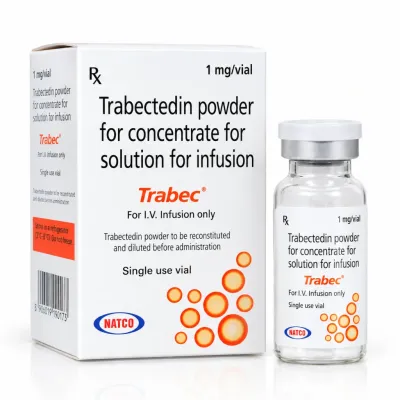
Medicines containing Trabectedin

-8%
Trabec
View
Natco
1 mg 1 vial
12740₴ 13857₴
✅ All products loaded (1)

Contact us

Choose a convenient way to contact

We work daily from 9:00 to 20:00