Palbociclib, ribociclib and abemaciclib: tablets for breast cancer

In about two out of three women with breast cancer, the tumour is hormone-sensitive: its growth is fuelled by oestrogen. The pathology report marks this as HR+ (hormone receptors present) and HER2− (no HER2 protein). For advanced cancer of this type, the standard over the last decade has become hormone therapy combined with tablets called CDK4/6 inhibitors.
There are three of them: palbociclib, ribociclib and abemaciclib. Below is how they work and how they differ. Your oncologist decides which medicine and dose you need.
How CDK4/6 inhibitors work
To divide, a cell goes through several stages, and the switch between them is triggered by the enzymes CDK4 and CDK6. In a hormone-sensitive tumour these enzymes are always switched on, and cells keep dividing. CDK4/6 inhibitors turn this switch off, and the tumour cells stop dividing.
They are taken together with hormone therapy — an aromatase inhibitor (letrozole, anastrozole) or fulvestrant. Together they work better: in large trials the combination roughly doubled the time without disease progression compared with hormone therapy alone.
Three medicines: the differences
| Palbociclib | Ribociclib | Abemaciclib | |
|---|---|---|---|
| How it is taken | Once a day, 21 days on and 7 days off | Once a day, 21 days on and 7 days off | Twice a day, no breaks |
| Main side effect | Low neutrophil count | Low neutrophils, effects on heart rhythm and liver | Diarrhoea |
| What is monitored | Full blood count | Blood count, ECG, liver tests | Bowel habits, blood count, liver tests |
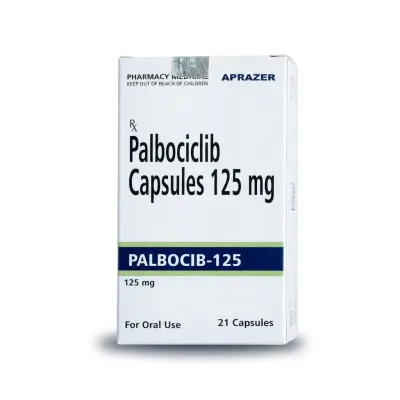
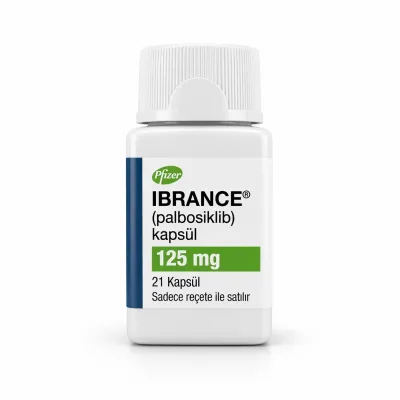
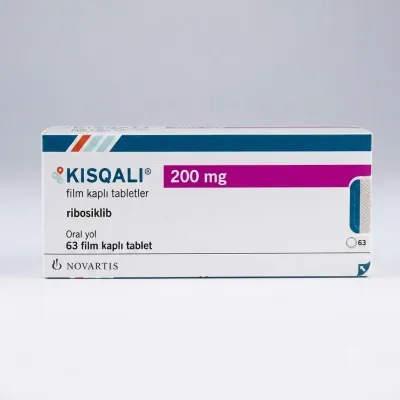
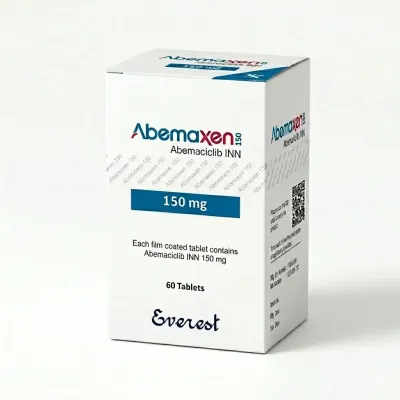
| In the Unifarm catalogue | Ibrance 125, Palbocib 125 | Kisqali 200 | Abemaxen 150 |
Ribociclib and abemaciclib are also used after surgery for early-stage disease when the risk of recurrence is high. Your oncologist decides this based on pathology and stage.
Side effects and tests
- Low neutrophils. These are blood cells that protect against infection. On palbociclib and ribociclib their level drops in almost everyone, so in the first months a full blood count is done every 2 weeks. It is usually not dangerous and is managed with a pause or a lower dose — but report a temperature above 38 °C to your doctor right away.
- Diarrhoea on abemaciclib. Most common in the first weeks. Doctors usually advise in advance which remedy to keep at home and when to start it, and to drink more water.
- Heart and liver on ribociclib. An ECG and liver tests are done before starting and in the first months.
- Interactions. Grapefruit, St John’s wort and many medicines change the level of these drugs in the blood. Tell your oncologist about everything you take, including herbs and supplements.
Original and generic
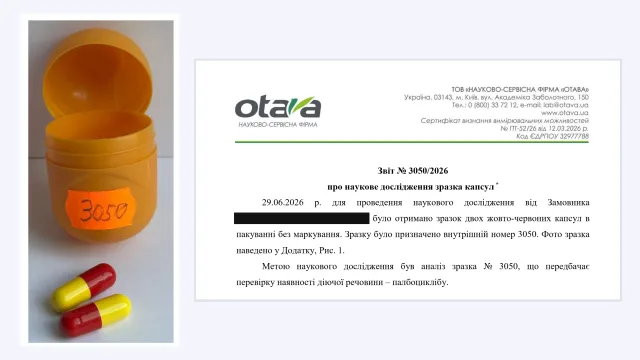
The original palbociclib is Ibrance (Pfizer). Palbocib is a generic with the same substance and dose. We sent Palbocib capsules for independent laboratory testing, which confirmed palbociclib — details in the article with the full report.
When treatment lasts for years, the price difference becomes decisive, and a generic makes it possible to continue therapy. Switching from the original to a generic, or from one medicine to another, should only be done with your oncologist’s agreement.
This article is for information only. Your oncologist chooses the treatment and dose.