Molnupiravir for COVID-19: how Molnuvir differs from original Lagevrio

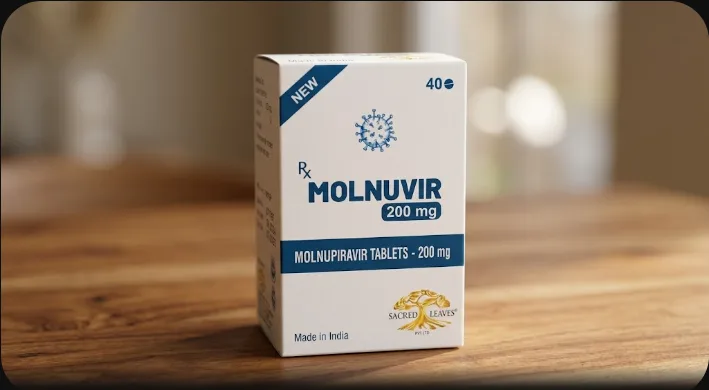
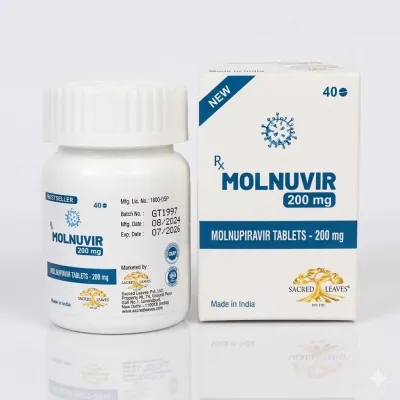
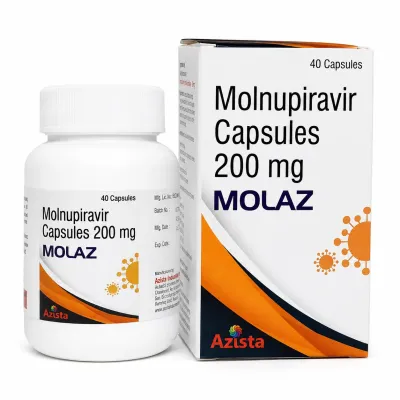
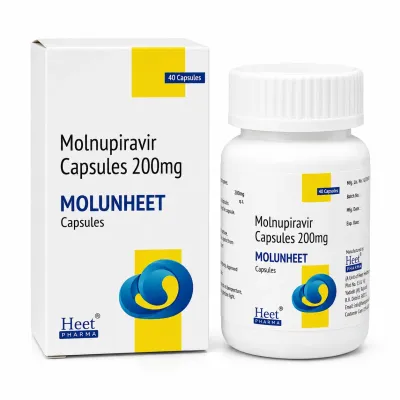
Molnupiravir is one of the first oral antiviral drugs specifically developed against COVID-19, alongside nirmatrelvir/ritonavir (Paxlovid). The original molnupiravir drug is Lagevrio (Merck). In the Unifarm catalogue, molnupiravir is available as Molnuvir, Molaz and Molunheet.
This article does not replace a doctor's consultation. The decision to prescribe an antiviral for COVID-19 is made by a doctor based on risk factors, day of illness, and coexisting conditions.
How molnupiravir works, and why the first days matter
Molnupiravir is a prodrug: inside the body it converts into a form resembling an RNA building block. The viral enzyme (RNA polymerase) incorporates this "faulty" molecule into a new copy of the viral genome, and over subsequent rounds of copying, more and more random errors accumulate in the genome — a mechanism called lethal mutagenesis. The end result is non-viable new viral particles.
This mechanism only works while the virus is actively replicating — so the drug is effective exclusively within the first 5 days after symptoms begin. Starting a course later no longer gives the same effect, because the main peak of viral replication has already passed, and the body is already dealing with the infection's consequences rather than its growth.
The course is 4 capsules of 200 mg twice a day for 5 days (a total daily dose of 1600 mg). The regimen and whether it's warranted are determined by a doctor: molnupiravir is intended mainly for patients at risk of severe illness — the elderly, and those with obesity, diabetes, or chronic lung and heart disease.
Molnupiravir and favipiravir are not the same thing

Lethal mutagenesis
200 mg × 4 capsules, twice a day, 5 days

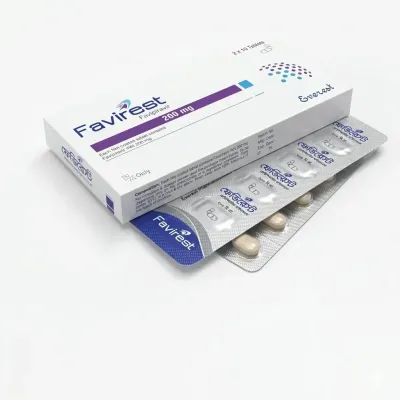
Favipiravir directly blocks the viral RNA polymerase, stopping it from working at all, while molnupiravir lets the enzyme keep working but feeds it faulty material. Because of this difference in mechanism, the drugs have different dosing schedules, different tolerability profiles, and different evidence bases for COVID-19 effectiveness — one should not be substituted for the other without a doctor.
Generic vs original
| Parameter | Lagevrio (original) | Molnuvir (generic) |
|---|---|---|
| Active substance | Molnupiravir | Molnupiravir |
| Manufacturer | Merck (USA) | Indian manufacturers (under MPP license) |
| Regimen | 800 mg twice a day, 5 days | 800 mg twice a day, 5 days |
| Price | Higher | Lower |
Many Indian generic versions of molnupiravir are produced under a voluntary Merck license through the Medicines Patent Pool (MPP) — an official program that enables affordable generics for low- and middle-income countries, not a "grey market" arrangement.
Who molnupiravir is not for
- Pregnancy and pregnancy planning. Molnupiravir is contraindicated during pregnancy due to possible effects on fetal development (preclinical animal studies noted impaired bone and cartilage growth); women of childbearing age are advised to use contraception during treatment and for 4 days after.
- Men planning conception are advised, for the same reason, to use barrier contraception for at least 3 months after the course — these recommendations are stated in the leaflet and based on preclinical trial data.
- Children and adolescents under 18. The drug may affect bone and cartilage growth, so it is not used in pediatrics.
- Mild illness with no risk factors. In young, healthy people with no coexisting conditions, the benefit is minimal — the body usually clears the infection on its own, and routine prescribing to such patients is not recommended.
A similar-in-purpose (but not mechanism) drug is Favirest (favipiravir), which also blocks viral replication but targets a different viral enzyme. Which drug, if any, is needed is decided by a doctor based on the clinical picture, day of illness, and list of coexisting conditions.
This article is for reference only and does not replace a doctor's consultation.