Food and exercise during cancer treatment: what really helps

During cancer treatment the body needs extra strength: to repair tissue, fight infections and cope with side effects. If a person loses a lot of weight and muscle, treatment becomes harder to tolerate and sometimes has to be delayed. That is why food and exercise are not a minor detail but part of treatment.
The main goal: do not lose weight
During treatment the goal is usually not to lose weight but to keep it, especially your muscle. Weigh yourself once a week. If you have lost more than 5% of your weight in a month, tell your oncologist — you may need a dietitian or special medical nutrition.
Protein at every meal
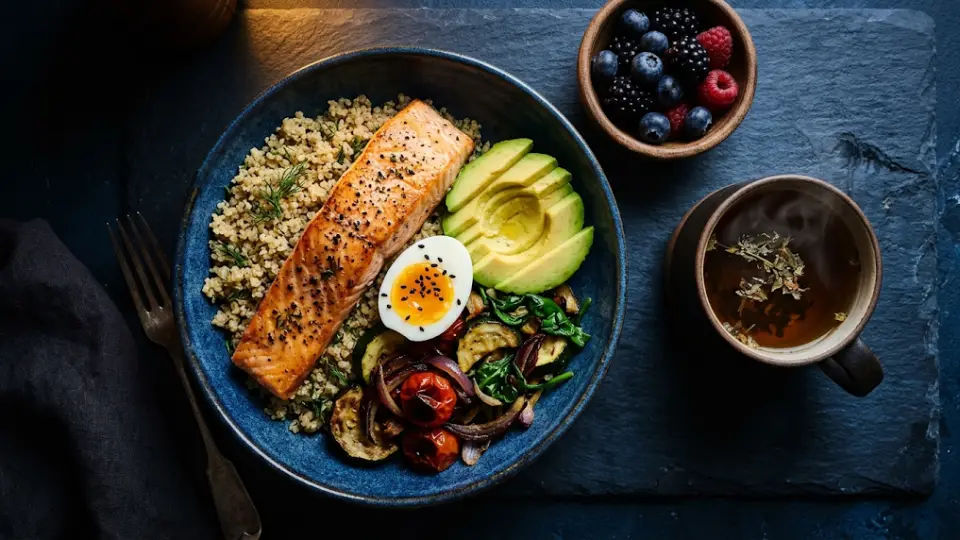
Protein is needed to keep muscle and heal tissue. The usual recommendation is 1–1.5 g of protein per kg of body weight a day — 70–100 g for a person weighing 70 kg. Good sources are eggs, fish, poultry, cottage cheese, yoghurt, cheese and beans. If eating is hard, protein shakes and medical nutrition drinks from the pharmacy help.
If you feel sick or have no appetite
- eat 5–6 small meals a day instead of 3 large ones;
- keep snacks to hand: nuts, yoghurt, cheese, biscuits;
- eat when you feel best — often in the morning;
- choose cold or warm dishes: hot food smells stronger, which can trigger nausea;
- drink between meals rather than with them.
If nausea stops you eating, tell your doctor: there are good anti-sickness medicines, and there is no need to put up with it.
If your taste changes or your mouth is sore
- for a metallic taste, plastic cutlery, lemon juice, pickles and spices help (if there are no mouth sores);
- with mouth sores, choose soft food: porridge, purées, soufflés, omelettes; avoid sour, spicy and hard food;
- rinse your mouth several times a day with a baking soda or salt solution and brush with a soft toothbrush.
Food safety when immunity is low
If treatment has lowered your white blood cells, your body is less able to fight infection. During this time:
- cook meat, fish and eggs thoroughly and avoid sushi and raw eggs;
- wash fruit and vegetables carefully;
- choose pasteurised milk and cheese;
- do not eat food past its use-by date or food left out at room temperature for a long time.
Be careful with supplements and “anti-cancer diets”
Fasting, “alkaline” diets, cutting out sugar “so as not to feed the tumour” and juices instead of meals do not treat cancer, but they do weaken the body. Supplements are not harmless either: St John’s wort, turmeric, high doses of antioxidant vitamins and grapefruit can weaken medicines or make them more toxic. Ask your oncologist before taking any supplement.
It is best to avoid alcohol during treatment: it strains the liver and can interact with medicines.
Staying active is allowed — and needed
Patients used to be told to rest as much as possible. Research now shows the opposite: manageable activity reduces fatigue, preserves muscle and improves sleep and mood.
- start with daily 10–15 minute walks and gradually increase the time;
- aim for about 150 minutes of moderate activity a week if you feel up to it;
- add light strength exercises twice a week with a band, small dumbbells or your own body weight;
- rest on days of severe weakness, fever or low haemoglobin.
If you have bone metastases, a port, recent surgery or heart problems, discuss with your doctor which exercise is safe.
This article is for information only. It is best to plan your diet and exercise together with your oncologist or a dietitian.