EGFR-mutant lung cancer: osimertinib and other tablets

Twenty years ago, advanced lung cancer was treated almost only with chemotherapy. Today the tumour is tested for genetic changes before treatment starts, and some patients turn out to have an EGFR mutation. For them there are tablets that target this change directly and often work better than chemotherapy.
Who has an EGFR mutation
An EGFR mutation is found in about 10–15% of patients with non-small cell lung cancer in Europe and in almost half in Asia. It is more common in non-smokers, in women and in adenocarcinoma. But all patients with adenocarcinoma should be tested, regardless of sex or smoking.
The test is done on tumour tissue from a biopsy or, if there is too little tissue, on blood (liquid biopsy). More about the methods in our article on molecular tumour testing.
How the tablets work
The EGFR gene controls a receptor that tells the cell to divide. With a mutation the receptor is always switched on, and the tumour keeps growing. EGFR inhibitors block it, and the cells stop receiving the signal to divide.
There are several generations of these medicines:
| Generation | Substance | In the Unifarm catalogue |
|---|---|---|
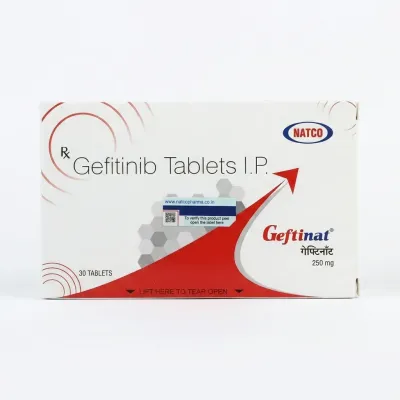
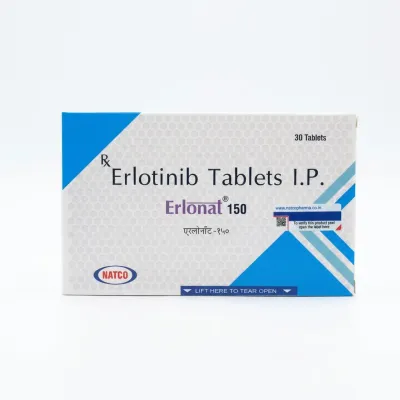
| First | Gefitinib, erlotinib | Geftinat 250, Erlonat 150 |
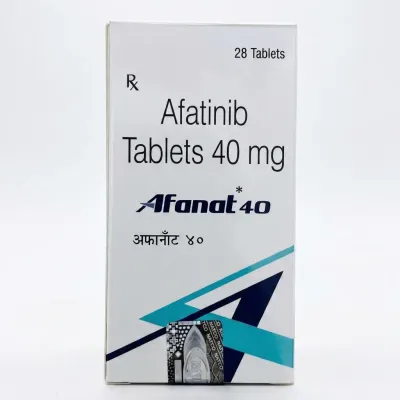
| Second | Afatinib | Afanat 40 |
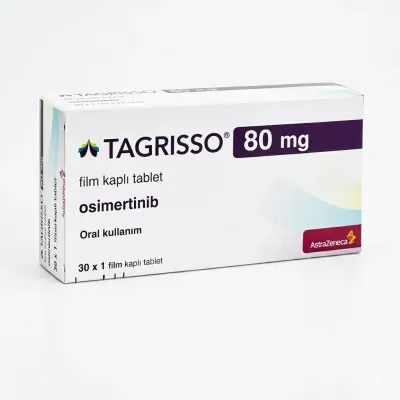
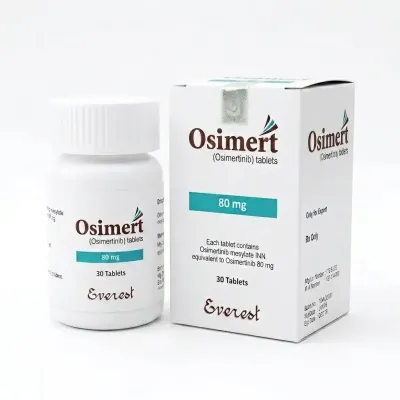
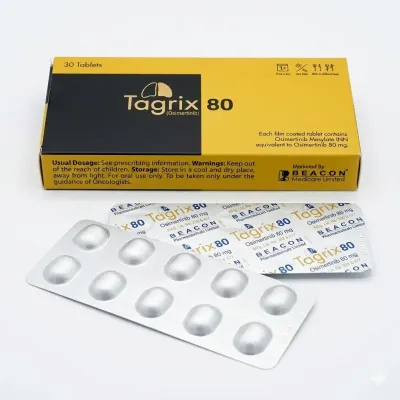
| Third | Osimertinib | Tagrisso 80, Osimert 80, Tagrix 80 |
Why osimertinib is usually given first
- It holds the disease back longer. In the FLAURA trial, the disease did not progress for about 19 months on average with osimertinib, compared with 10 months on gefitinib or erlotinib, and patients lived longer.
- It reaches the brain well. Lung cancer often spreads to the brain, and osimertinib works better on brain metastases than other medicines.
- It works with the T790M mutation. This is a common reason why first- and second-generation medicines stop working. If the disease progresses after them and T790M is found, osimertinib is given.
Osimertinib is also used after surgery in early stages to lower the risk of the disease coming back. Your oncologist chooses the medicine based on the stage, the type of mutation and your condition.
How it is taken and possible side effects
Osimertinib is taken as one 80 mg tablet a day, with or without food. The most common side effects are:
- an acne-like rash and dry skin — gentle cleansers, moisturisers and sun protection help;
- inflammation around the nails — wear comfortable shoes and do not cut the cuticles;
- diarrhoea — drink more water and agree with your doctor in advance which remedy to take.
A rare but serious side effect is lung inflammation. If you suddenly develop shortness of breath, a cough or fever, tell your oncologist right away. Heart tests such as an ECG are sometimes done during treatment too.
Original and generics
The original osimertinib is Tagrisso (AstraZeneca). Treatment lasts for years, so many people choose generics with the same substance and dose — for example, Osimert or Tagrix. Only switch from one medicine to another with your oncologist’s agreement.
This article is for information only. Your oncologist prescribes treatment based on your test results.