Prostate cancer: the PSA test, abiraterone and enzalutamide

Prostate cancer is one of the most common cancers in men over 50. It often grows slowly and causes no symptoms for years, but aggressive forms also exist. A simple PSA blood test helps find it early, and for advanced cancer there are now tablets that keep the disease in check for a long time.
What PSA is and when to test
PSA (prostate-specific antigen) is a protein made by the prostate. In cancer its blood level often rises. But not only in cancer: PSA also rises with an enlarged prostate, inflammation, after cycling, prostate massage or ejaculation the day before the test.
- Men usually discuss the test with their doctor from age 50.
- If a father or brother had prostate cancer, or you carry BRCA mutations — from 40–45.
- For 2 days before the test it is best to avoid cycling, sex and prostate massage.
A raised PSA is not yet a diagnosis. Usually the test is repeated, then a prostate MRI is done, and only if it shows a suspicious area is a biopsy taken.
How prostate cancer is treated
Treatment depends on the stage and how aggressive the tumour is:
- Slow-growing early cancer is often not treated straight away but monitored with regular PSA tests and MRI. This is called active surveillance — it spares men unnecessary surgery and its consequences.
- Localised cancer is treated with surgery or radiotherapy.
- Advanced cancer is treated with hormone therapy, often combined with newer tablets.
Why hormone therapy works
Prostate cancer growth is fuelled by male sex hormones — androgens, above all testosterone. The basis of treatment is medicines that lower testosterone (injections every 1–3 months). Over time the tumour learns to grow even with low testosterone, and that is when abiraterone and enzalutamide help. Today they are often given earlier — together with hormone therapy from the start — because this extends life.
Abiraterone and enzalutamide: the difference
| Abiraterone | Enzalutamide | |
|---|---|---|
| How it works | Stops androgen production throughout the body, including in the tumour itself | Blocks the receptor through which androgens act on tumour cells |
| How it is taken | On an empty stomach, together with a low dose of prednisolone | At any time, with or without food |
| What is monitored | Blood pressure, potassium, liver tests | Blood pressure, wellbeing, risk of falls |
| Common side effects | Swelling, higher blood pressure, low potassium | Fatigue, hot flushes, higher blood pressure |
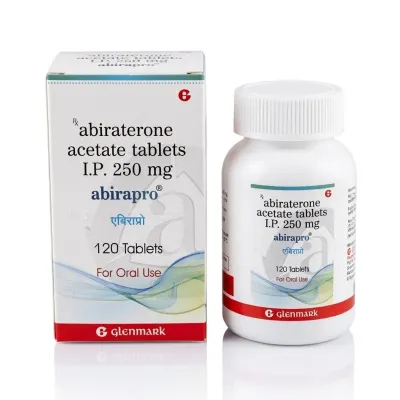
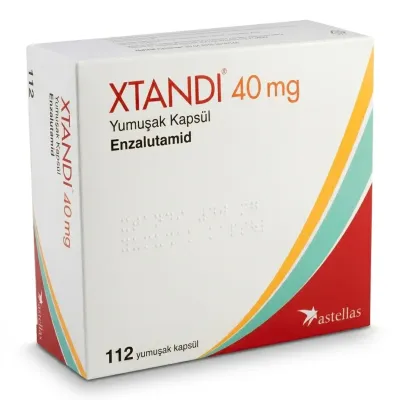
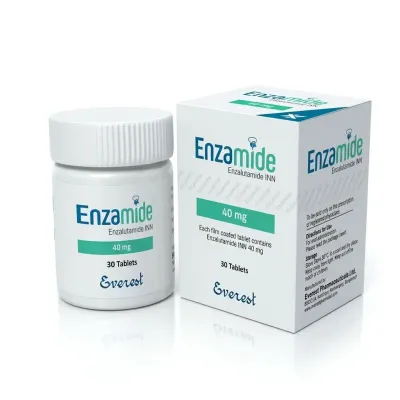
| In the Unifarm catalogue | Abirapro 250 | Xtandi 40, Enzamide 40 |
How to take abiraterone
Abiraterone is very sensitive to food: taken with a meal, several times more of it enters the blood and the risk of side effects rises. So it is taken on an empty stomach — at least one hour before or two hours after eating. Always take the prednisolone your doctor prescribed as well: it protects against side effects and must not be skipped.
What else matters
- hormone therapy weakens bones over time — your doctor may prescribe calcium, vitamin D and bone medicines;
- walking and strength exercises help keep muscle and reduce fatigue;
- enzalutamide interacts with many medicines — tell your doctor about everything you take;
- PSA is checked regularly during treatment: a rise is a reason to discuss changing therapy.
This article is for information only. Prostate cancer treatment is prescribed by an oncologist or uro-oncologist.