Chronic myeloid leukaemia: from imatinib to asciminib

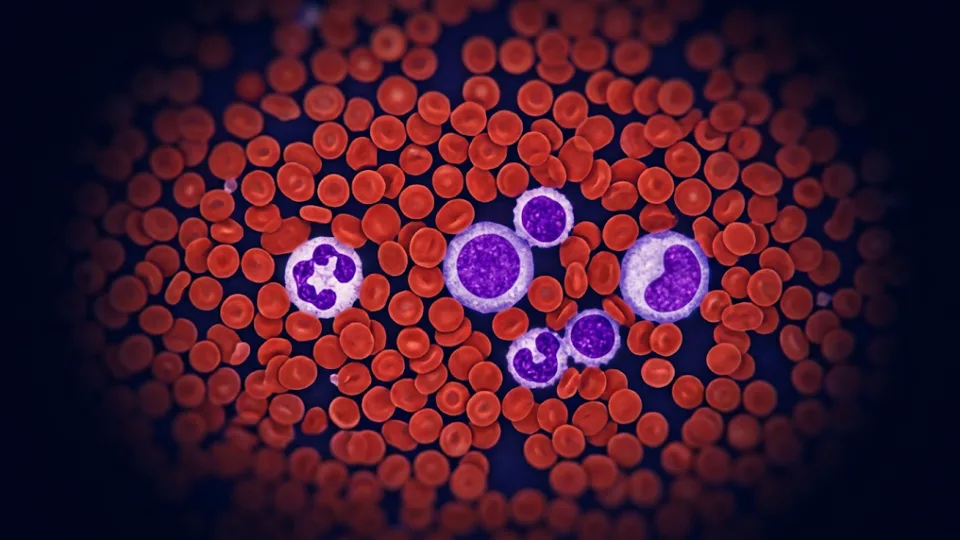
In the 1990s chronic myeloid leukaemia (CML) was a fatal disease: without a bone marrow transplant most patients lived only a few years. Everything changed when imatinib arrived in 2001. Today CML is treated with tablets, and most patients diagnosed in the chronic phase live almost as long as their peers.
What happens in CML
In a blood-forming cell of the bone marrow, parts of two chromosomes — 9 and 22 — swap places. This creates the “Philadelphia chromosome” and a new gene, BCR-ABL1. It produces an enzyme that constantly tells cells to divide. The blood fills with too many white cells, the spleen grows, and weakness and sweating appear. Sometimes the disease is found by chance on a routine blood test.
Medicines: several generations
All CML medicines block the BCR-ABL enzyme. They are called tyrosine kinase inhibitors (TKIs).
| Substance | When it is used | In the Unifarm catalogue |
|---|---|---|
| Imatinib | First line, especially at low risk | Imaxen 400 |
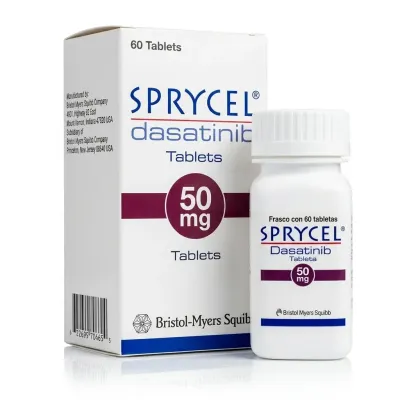
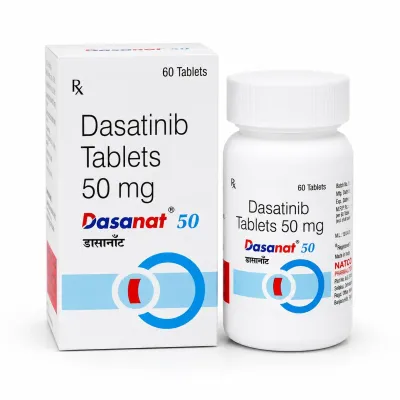
| Dasatinib | First line or if imatinib has not worked | Sprycel 50, Dasanat 50 |
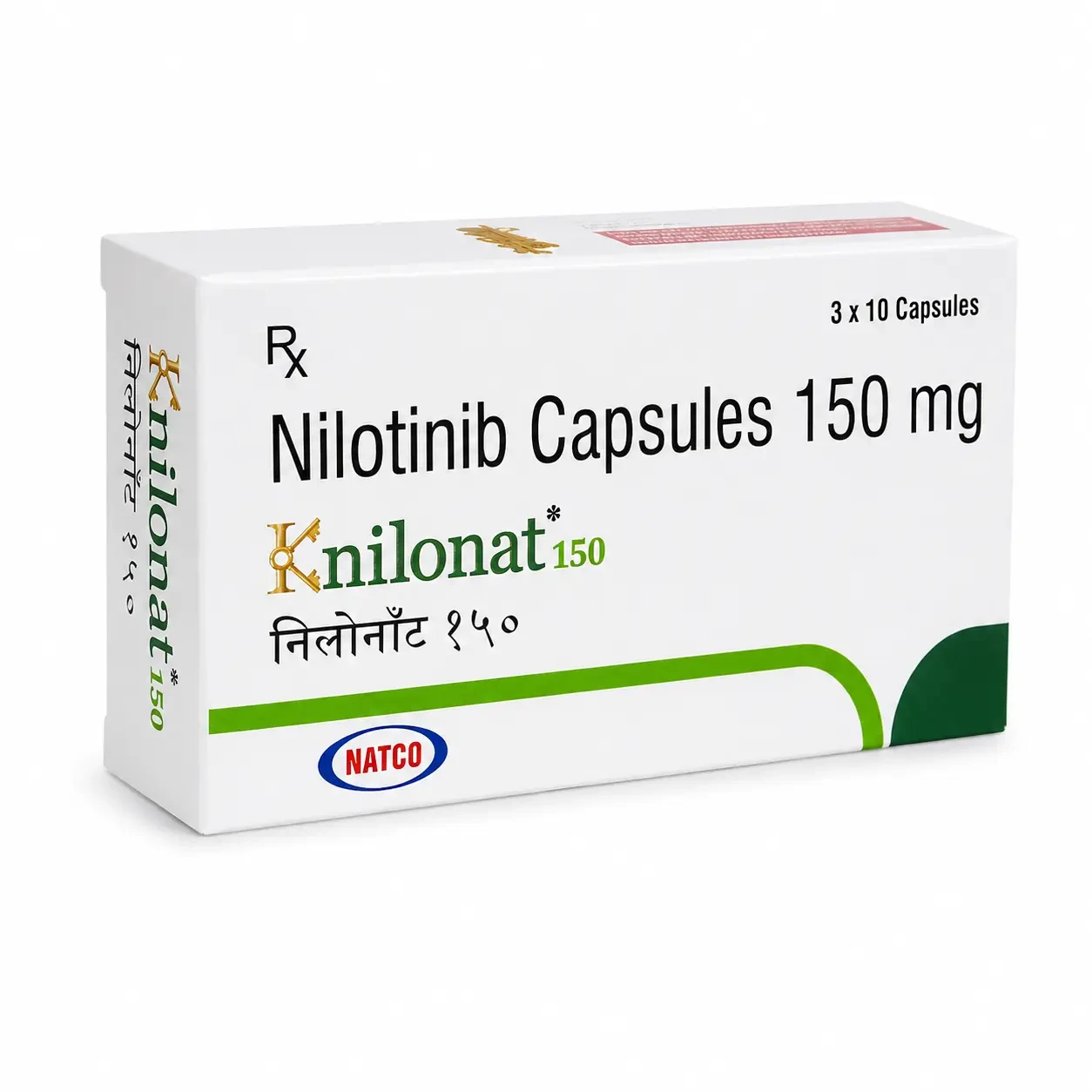
| Nilotinib | First line or if imatinib has not worked | Knilonat 150 |
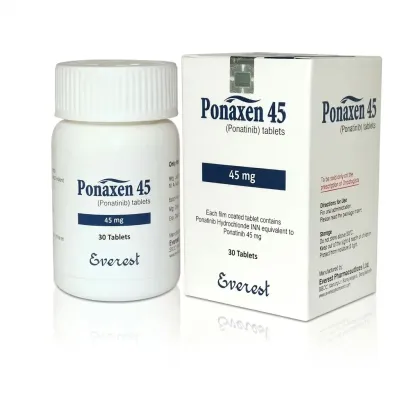
| Ponatinib | With the T315I mutation or after several medicines | Ponaxen 45 |
| Asciminib | After two or more medicines, with the T315I mutation | Ascimib 40 |
Second-generation medicines (dasatinib, nilotinib) work faster and deeper than imatinib but have their own side effects. Asciminib works differently: it binds to the enzyme at another site, so it helps when other medicines have stopped working. The haematologist chooses based on the disease phase, age, other conditions and mutations.
How treatment is monitored
The key test is a PCR blood test for BCR-ABL1. It shows how many diseased cells remain. It is usually done every 3 months, and less often once results are stable. The targets are:
- at 3 months — no more than 10%;
- at 6 months — no more than 1%;
- at 12 months — 0.1% or less (called a major molecular response).
If the targets are not met, the doctor checks whether the medicine is being taken regularly and looks for mutations that may stop it working. Then the medicine is changed.
Taking it regularly is the key to success
CML treatment lasts for years, and missed tablets are a common reason it stops working. A phone alarm and a weekly pill box help. It is also important that:
- nilotinib is taken on an empty stomach: no food for 2 hours before and 1 hour after;
- you avoid grapefruit juice and St John’s wort — they change the level of the medicine in the blood;
- you tell your haematologist about any new medicines.
Side effects
- Imatinib: swelling around the eyes, muscle cramps, nausea.
- Dasatinib: fluid around the lungs — report shortness of breath to your doctor right away.
- Nilotinib: higher blood sugar and cholesterol, effects on blood vessels and the heart.
- Ponatinib: a risk of blood clots, so blood pressure and vessels are monitored.
Can treatment be stopped?
Yes, for some patients. If treatment has lasted several years and BCR-ABL has stayed very low for a long time, the haematologist may suggest stopping under close monitoring, with a monthly test at first. In about half of these patients the disease does not come back. If the level rises again, the medicine is restarted and usually works again. Never stop treatment on your own.
This article is for information only. CML treatment is prescribed and monitored by a haematologist.